Osborne Head & Neck Institute | Los Angeles
Total Parotidectomy
Procedure, Indications, Risks, and Recovery
Ryan F. Osborne, MD, Fellowship-Trained Head & Neck Surgical Oncologist
Medically Reviewed By: OHNI Clinical Staff · Last Updated: November 4, 2026
Overview
What Is a Total Parotidectomy?
A total parotidectomy is the complete surgical removal of the parotid gland, which includes the superficial lobe (outer portion) and the deep lobe (portion beneath and behind the facial nerve).
This procedure differs from a superficial parotidectomy, which removes only the outer portion of the gland. Total parotidectomy is typically required when disease involves deeper structures or when more extensive removal is necessary to achieve complete tumor control1.
What Is Removed
Superficial Lobe
The outer portion of the parotid gland
Deep Lobe
The deeper portion beneath and behind the facial nerve
Clinical Indications
When Is a Total Parotidectomy Needed?
Total parotidectomy is not performed in all cases. It is usually recommended under specific circumstances.
Malignant Parotid Tumors
The most common indication. Malignant tumors may extend into both lobes, invade surrounding tissues, or involve the facial nerve².
Deep Lobe Tumors
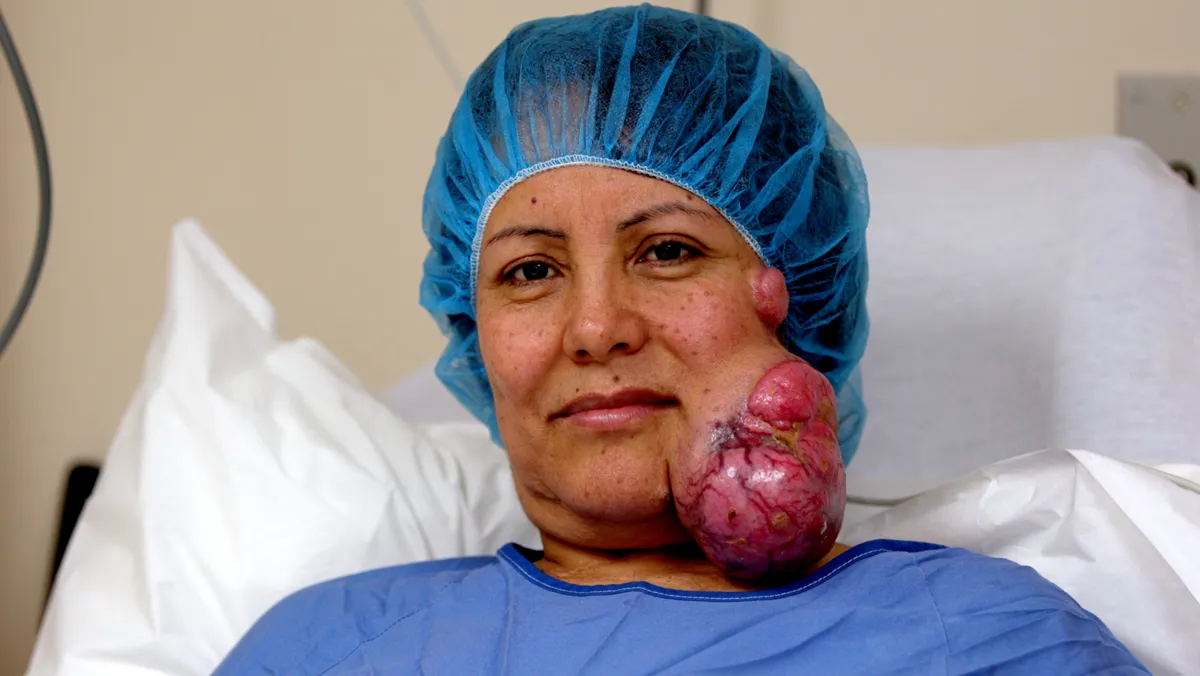
Tumors in the deep lobe cannot be safely removed with a superficial approach alone and may extend toward the throat or skull base.
Large or Extensive Tumors
Larger tumors spanning both lobes require full removal to ensure complete excision and reduce recurrence risk.
Recurrent Tumors
Tumors that return after previous surgery often require a more extensive approach due to scar tissue and altered anatomy³.
Uncertain Diagnosis
When preoperative testing cannot definitively determine if a tumor is benign or malignant, a more comprehensive approach may be recommended.
Critical Anatomy
The Role of the Facial Nerve
The facial nerve is the most important structure encountered during parotid surgery. It controls facial expression, eye closure, smiling, and symmetry. The nerve divides into multiple branches within the parotid gland, making surgical navigation complex.
Research shows that facial nerve involvement is a key factor in determining prognosis and surgical approach4.
Nerve Preservation vs. Removal
In many cases, the nerve can be preserved. However, if the tumor invades the nerve or cannot be separated safely, partial or complete nerve removal may be necessary to ensure complete cancer treatment.
Surgical Steps
How Total Parotidectomy Is Performed
The procedure is performed under general anesthesia and typically takes several hours.
Incision
A carefully planned incision is made in front of the ear and extended into the neck, providing full access while minimizing visible scarring.
Identification of the Facial Nerve
The surgeon identifies the main trunk of the facial nerve using anatomical landmarks, often with intraoperative nerve monitoring⁵.
Removal of Superficial Lobe
The outer portion of the gland is removed first to expose the deeper structures.
Removal of Deep Lobe
The surgeon carefully removes the deep portion of the gland while protecting or managing the facial nerve.
Reconstruction
If the nerve is affected, reconstructive techniques may include nerve grafting or muscle transfer procedures.
Closure and Drain
A drain is placed temporarily to prevent fluid accumulation, and the incision is closed carefully.
Recovery Timeline
Recovery varies depending on the extent of surgery and whether the facial nerve was preserved.
Immediate Recovery
- Hospital stay of 1–2 days
- Drain placement for several days
- Swelling and mild discomfort
Short-Term (2–4 Weeks)
- Gradual reduction in swelling
- Return to daily activities
- Monitoring for complications
Important Information
Risks and Complications
Total parotidectomy carries a higher risk profile than superficial procedures due to its complexity.
Facial Nerve Weakness
Temporary weakness is common, occurring in up to 66% of cases. Permanent paralysis is less common but may occur in malignant cases⁴.
Frey's Syndrome
Sweating or flushing in the cheek while eating, caused by abnormal nerve regeneration.
Numbness
Loss of sensation around the ear and jaw is common and often improves over time.
Salivary Complications
Salivary fistula or fluid collections are typically temporary.
Cosmetic Changes
Removal of the gland may result in facial contour changes or mild asymmetry. Reconstructive techniques can help.
Outcomes and Prognosis
Benign Tumors
- Excellent outcomes
- Low recurrence rates when completely removed
Malignant Tumors
Prognosis depends on tumor type, stage, and facial nerve involvement. Early detection and complete removal significantly improve survival outcomes2.
Innovation
Advances in Total Parotidectomy
Intraoperative Nerve Monitoring
Provides real-time feedback and reduces nerve injury risk⁵.
Improved Imaging
High-resolution imaging allows for better surgical planning.
Reconstructive Techniques
Advanced methods help restore facial function and cosmetic appearance.
Expertise Matters
Importance of Surgeon Expertise
Total parotidectomy is a highly specialized procedure. Outcomes depend on surgeon experience, surgical precision, and familiarity with facial nerve anatomy.
Studies consistently show that experienced surgeons achieve lower complication rates and better functional outcomes4.
When to See a Specialist
- A persistent lump near the ear or jaw
- Facial weakness or asymmetry
- Rapidly growing mass
- Pain or numbness
Early evaluation improves treatment success and reduces complications.
References
- Salivary gland tumor management and surgical approaches. Oral Diseases.
- NCCN Guidelines for Head and Neck Cancers.
- Renehan AG et al. Long-term outcomes of salivary gland tumors. British Journal of Surgery.
- Guntinas-Lichius O et al. Facial nerve outcomes after parotidectomy. Acta Oto-Laryngologica.
- Randolph GW et al. Nerve monitoring in head and neck surgery. The Laryngoscope.
Patient Education
Frequently Asked Questions
Total parotidectomy removes the entire gland, while superficial parotidectomy removes only the outer portion.
Often yes, especially if the tumor involves both lobes or deeper structures.
Temporary weakness is common, but permanent paralysis is less frequent and depends on tumor involvement.
Most patients recover within several weeks, but nerve recovery may take months.
Recurrence is possible, especially in malignant cases, which is why follow-up is important.
Why Choose OHNI
Not Big Medicine | Personalized, Global Expertise
Many patients assume the best care is found at large, well-known institutions. While these centers offer excellent care, they often operate within standardized systems shaped by regional training models.
At OHNI, Dr. Ryan Osborne offers something fundamentally different: a truly global perspective combined with highly personalized surgical care with experience across five continents, tailoring each procedure to the individual patient, not the system.
Global Perspective
Experience across five continents, applying diverse surgical philosophies and techniques beyond standard U.S. training.
Precision & Preservation
Specialized techniques like Extra-Capsular Dissection designed to minimize invasiveness while protecting the facial nerve.
Patient-First Care
Direct surgeon access, individualized treatment planning, and a focus on both medical outcomes and quality of life.
Proven Outcomes
Patients consistently highlight clear communication, confident surgical decisions, and excellent functional results.
Expert Parotid Surgery
If you have been diagnosed with a parotid tumor requiring extensive surgery, choosing a specialist with expertise in parotidectomy is one of the most important decisions you can make.
Become a Patient
Contact the Osborne Head & Neck Institute for expert parotid surgery consultation.