Osborne Head & Neck Institute | Los Angeles
Superficial Parotidectomy
Procedure, Recovery, Risks, and Outcomes
Ryan F. Osborne, MD, Fellowship-Trained Head & Neck Surgical Oncologist
Medically Reviewed By: OHNI Clinical Staff · Last Updated: November 4, 2026
Overview
What Is a Superficial Parotidectomy?
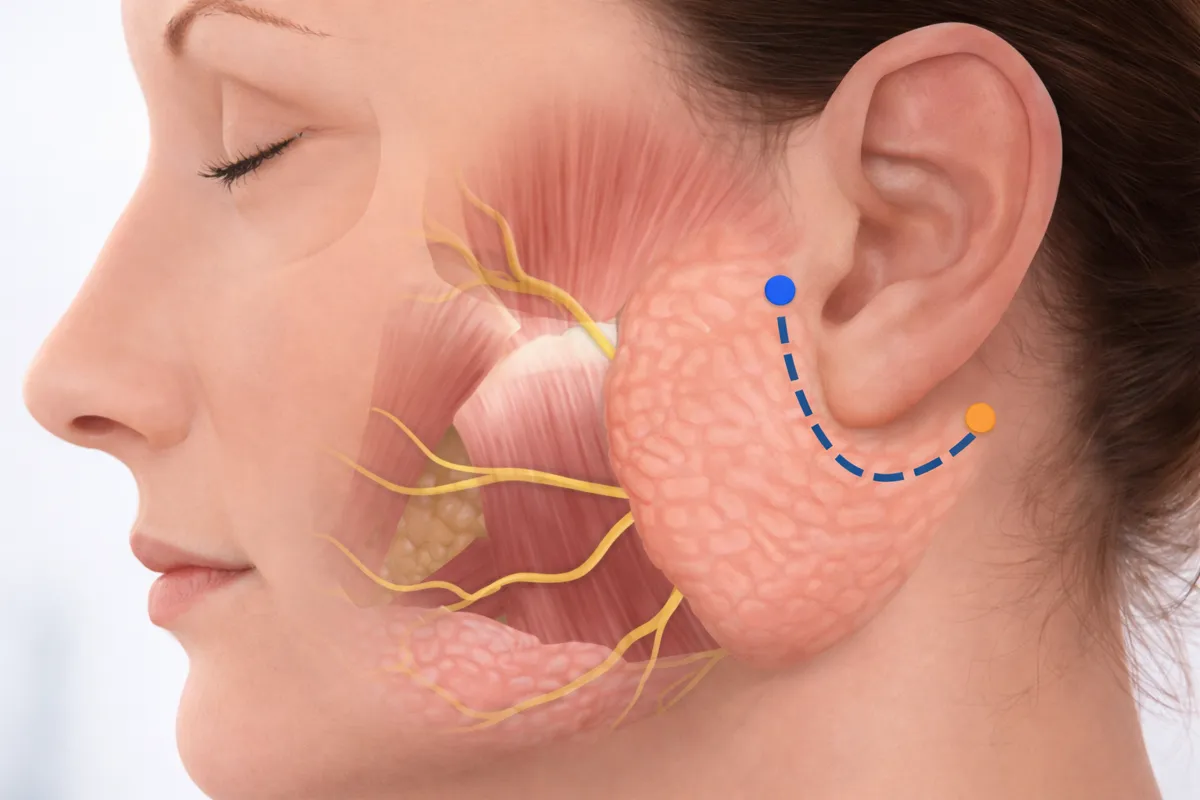
A superficial parotidectomy is a surgical procedure that removes the superficial lobe of the parotid gland, which lies above and around the facial nerve. The parotid gland has two main parts: the superficial lobe (outer portion) and the deep lobe (deeper portion behind the facial nerve).
Most parotid tumors, particularly benign ones, arise in the superficial lobe. For this reason, superficial parotidectomy is the most commonly performed type of parotid surgery1.
Common Indications
- Benign tumors such as pleomorphic adenoma
- Warthin tumors
- Small, localized malignant tumors
- Diagnostic uncertainty requiring removal
Surgical removal is the standard treatment for most parotid tumors, even when benign2.
Critical Anatomy
The Role of the Facial Nerve
The facial nerve is one of the most critical structures involved in parotid surgery. It controls smiling, eye closure, and facial expression4.
Eye Closure
The facial nerve controls the ability to close the eye, critical for corneal protection.
Facial Expression
Smiling, frowning, and all facial movements depend on proper nerve function.
Nerve Preservation
Preserving the facial nerve during surgery is the single most important factor in how well a patient recovers, the ability to smile, close the eye, and move the face depends entirely on an intact nerve.⁴
Surgical Steps
How Superficial Parotidectomy Is Performed
The procedure is performed under general anesthesia and typically takes several hours.
Incision
A carefully designed incision is made in front of the ear and extended into the neck, providing access while minimizing visible scarring.
Identification of the Facial Nerve
The surgeon locates the main trunk of the facial nerve using anatomical landmarks. Modern techniques often include intraoperative nerve monitoring⁵.
Removal of the Superficial Lobe
The superficial portion of the gland containing the tumor is removed while preserving the nerve and all its branches.
Closure and Drain Placement
A small drain may be placed temporarily to prevent fluid accumulation. The incision is closed carefully to optimize healing.
Recovery Timeline
Recovery After Superficial Parotidectomy
Recovery is generally well tolerated, especially when the surgery is performed by an experienced specialist.
Immediate Recovery
- Same-day discharge or overnight stay
- Mild swelling and discomfort
- Temporary drain placement
Short-Term (2–4 Weeks)
- Gradual reduction in swelling
- Return to normal activities
- Monitoring for complications
Important Information
Risks and Complications
While superficial parotidectomy is generally safe, there are potential risks that patients should understand.
Facial Nerve Weakness
Temporary weakness occurs in approximately 15% to 66% of cases depending on tumor complexity. Permanent nerve injury is rare with experienced surgeons⁴.
Frey's Syndrome
Sweating or flushing in the cheek while eating, caused by abnormal nerve regeneration.
Numbness
Patients may experience numbness around the ear and jaw. This often improves over time.
Salivary Complications
Salivary fistula or fluid collections are typically temporary and manageable.
Benefits of Superficial Parotidectomy
High Cure Rates
Highly effective for benign tumors with low recurrence rates when performed correctly⁷.
Facial Nerve Preservation
Modern techniques allow surgeons to preserve the facial nerve in most cases.
Improved Cosmetic Outcomes
Careful incision placement helps maintain facial symmetry and minimize visible scarring.
Innovation
Advances in Surgical Techniques
Intraoperative Nerve Monitoring
Real-time feedback helps surgeons avoid nerve injury and significantly improves nerve identification and preservation⁵.
Minimally Invasive Approaches
In select cases, less extensive surgery may reduce complications while maintaining effectiveness.
Improved Imaging
High-resolution imaging allows for better surgical planning and precision.
Considerations
When a More Extensive Surgery Is Needed
In some cases, superficial parotidectomy may not be sufficient. A total parotidectomy may be required if:
- The tumor extends into the deep lobe
- Malignancy is confirmed
- There is involvement of surrounding structures
Choosing the Right Surgeon
Superficial parotidectomy is a specialized procedure. Outcomes depend heavily on surgeon experience, surgical technique, and understanding of facial nerve anatomy.
Studies consistently show that experienced surgeons achieve better outcomes and lower complication rates4.
References
- Salivary gland tumor distribution and surgical management. Oral Diseases.
- Clinical guidelines for treatment of parotid tumors. Head and Neck Oncology literature.
- Epidemiology of parotid gland tumors. WHO Classification of Head and Neck Tumours.
- Guntinas-Lichius O et al. Risk of facial palsy after parotidectomy. Acta Oto-Laryngologica.
- Randolph GW et al. Nerve monitoring in head and neck surgery. The Laryngoscope.
- Bron LP, O'Brien CJ. Facial nerve recovery after parotidectomy. Archives of Otolaryngology–Head & Neck Surgery.
- Witt RL. Surgical margins and recurrence in parotid tumors. The Laryngoscope.
Patient Education
Frequently Asked Questions
Superficial parotidectomy removes only the outer portion of the gland, while total parotidectomy removes the entire gland.
Most patients recover within 2–4 weeks, with full healing occurring over several months.
Temporary weakness is possible, but permanent paralysis is rare when performed by experienced surgeons.
Yes. It is a well-established and commonly performed procedure with high success rates.
Recurrence is uncommon when the tumor is completely removed, but long-term follow-up is important.
Why Choose OHNI
Not Big Medicine | Personalized, Global Expertise
Many patients assume the best care is found at large, well-known institutions. While these centers offer excellent care, they often operate within standardized systems shaped by regional training models.
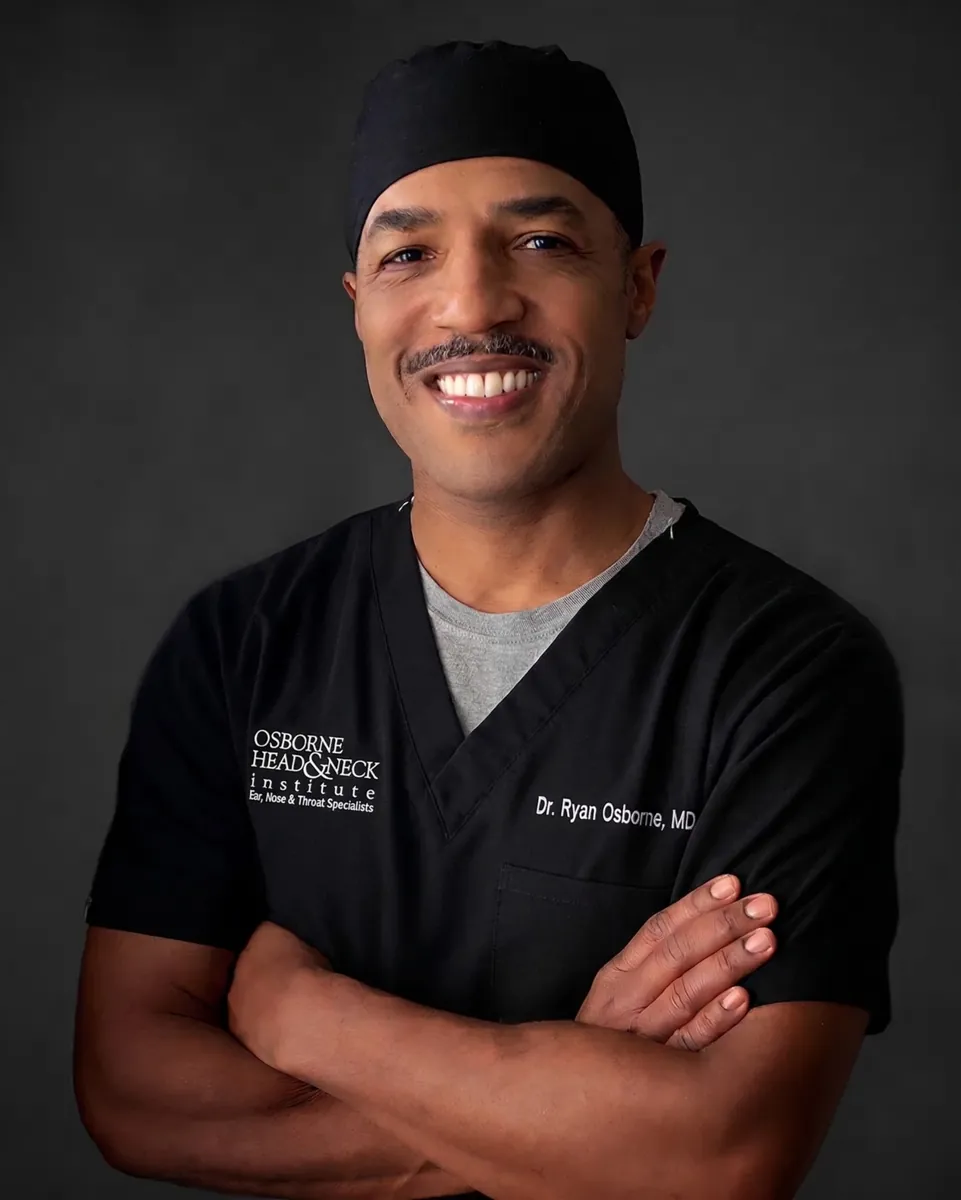
At OHNI, Dr. Ryan Osborne offers something fundamentally different: a truly global perspective combined with highly personalized surgical care with experience across five continents, tailoring each procedure to the individual patient, not the system.
Global Perspective
Experience across five continents, applying diverse surgical philosophies and techniques beyond standard U.S. training.
Precision & Preservation
Specialized techniques like Extra-Capsular Dissection designed to minimize invasiveness while protecting the facial nerve.
Patient-First Care
Direct surgeon access, individualized treatment planning, and a focus on both medical outcomes and quality of life.
Proven Outcomes
Patients consistently highlight clear communication, confident surgical decisions, and excellent functional results.
Expert Parotid Surgery
If you have been diagnosed with a parotid tumor, understanding your surgical options, and choosing an experienced specialist, are the most important steps toward a successful outcome.
Become a Patient
Contact the Osborne Head & Neck Institute for expert parotid surgery consultation.