Osborne Head & Neck Institute | Los Angeles
Frequently Asked Questions
Patient Education & Insights
Ryan F. Osborne, MD | Fellowship-Trained Head & Neck Surgical Oncologist
Medically Reviewed By: OHNI Clinical Staff · Last Updated: November 4, 2026
PATIENT EDUCATION
Video FAQs - Video Answers by Dr. Osborne to Frequently Asked Questions
Watch short video explanations to the most frequently asked questions about salivary gland conditions and parotid surgery.
PATIENT EDUCATION
Frequently Asked Questions
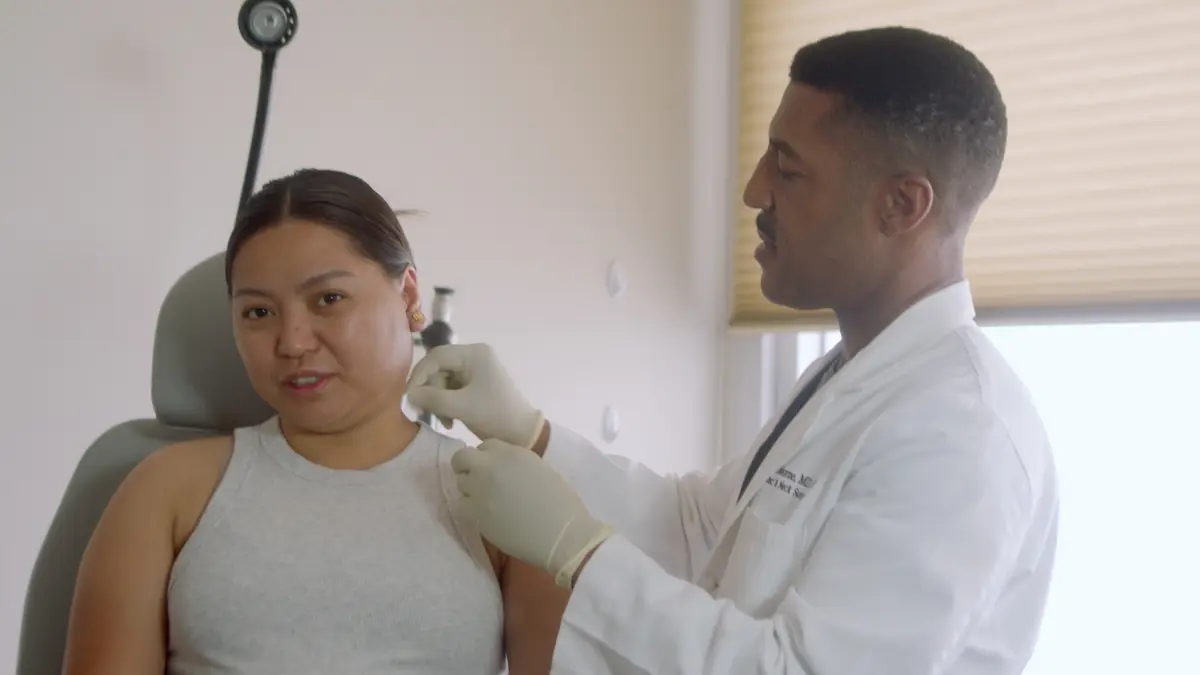
A parotid tumor is an abnormal growth in the parotid gland, the largest salivary gland located just in front of each ear. Most parotid tumors are benign, but all require proper evaluation.
Most parotid tumors are benign and not immediately dangerous. However, some can become malignant over time, so timely evaluation and treatment are important.
The standard treatment is surgical removal (parotidectomy). The extent of surgery depends on the tumor's type, size, and location within the gland.
Temporary facial weakness can occur but is usually temporary and resolves over weeks to months. Permanent weakness is uncommon when surgery is performed by experienced specialists.
Yes. Some benign parotid tumors, especially pleomorphic adenomas, can recur after prior treatment. Recurrence may appear years later and may present as a single mass or multiple nodules.
No. Many recurrent parotid tumors are still benign, particularly recurrent pleomorphic adenomas. However, every recurrence should be evaluated carefully with imaging, pathology review, and clinical examination.
MRI helps define the number, size, and distribution of recurrent nodules and can clarify whether disease is localized or multifocal. This information is critical for surgical planning.
No. The majority of salivary gland tumors are benign. However, all masses should be evaluated by a specialist, as a small percentage are malignant.
No. Most parotid tumors are benign, but evaluation is required to determine the type.
In select cases, yes, but most benign tumors are recommended for removal due to growth and potential risks over time.
Not always. Many cases are due to Bell's palsy, which is often temporary. However, evaluation is essential to rule out more serious causes.
This is uncommon. Facial weakness is more often associated with malignant or nerve-involved tumors.
Bell's palsy is the most common cause of acute facial paralysis. However, when a mass is present near the jaw or ear, a parotid tumor must be considered.
No. Most lumps near the jaw are benign, including non-cancerous tumors or lymph nodes. However, evaluation is necessary to confirm the diagnosis.
Yes. Many parotid tumors present as painless, slow-growing masses.
About 20–25% of parotid tumors are malignant.
Symptoms such as facial weakness, pain, and rapid growth may suggest cancer, but only medical evaluation can confirm this.
Yes, but it is rare. Some tumors, like pleomorphic adenomas, can become malignant over time if untreated.
Most do, even if benign, to prevent growth, recurrence, or transformation.
The most common symptom is a painless, slow-growing mass near the ear or jawline.
Most are benign, but some can be malignant, requiring careful evaluation.