
Osborne Head & Neck Institute | Los Angeles
Extracapsular Dissection
A Minimally Invasive Approach to Parotid Tumor Removal
Ryan F. Osborne, MD, Fellowship-Trained Head & Neck Surgical Oncologist
Medically Reviewed By: OHNI Clinical Staff · Last Updated: November 4, 2026
Overview
What Is Extracapsular Dissection?
Extracapsular dissection is a focused surgical technique used to remove a parotid tumor by dissecting around its capsule with a small margin of normal tissue. This approach differs from superficial parotidectomy, which involves identifying the facial nerve trunk and removing a larger portion of the gland.
Research shows that less invasive approaches can reduce complication rates in selected patients without compromising tumor control1.
Key Features
- Removal of the tumor without exposing the entire facial nerve
- Limited dissection of surrounding tissue
- Preservation of unaffected portions of the gland
Background
Why Extracapsular Dissection Was Developed
Traditional parotidectomy techniques have long been the standard of care. However, these approaches can be associated with facial nerve manipulation, temporary nerve weakness, and longer recovery times.
Extracapsular dissection was developed to minimize surgical trauma while still achieving complete tumor removal.
Patient Selection
When Is Extracapsular Dissection Appropriate?
Not all parotid tumors are suitable for this technique. Careful patient selection is essential2.
Ideal Candidates
- Small tumors (typically less than 3–4 cm)
- Benign tumors confirmed or strongly suspected
- Tumors located in the superficial lobe
- Tumors that are mobile and well-defined
Common tumor types: Pleomorphic adenoma (select cases), Warthin tumor, other benign lesions.
When ECD Is Not Recommended
- Malignant tumors
- Large or deeply located tumors
- Tumors involving the facial nerve
- Recurrent tumors
In these situations, more extensive surgery is required for complete removal.
Surgical Steps
How Extracapsular Dissection Is Performed
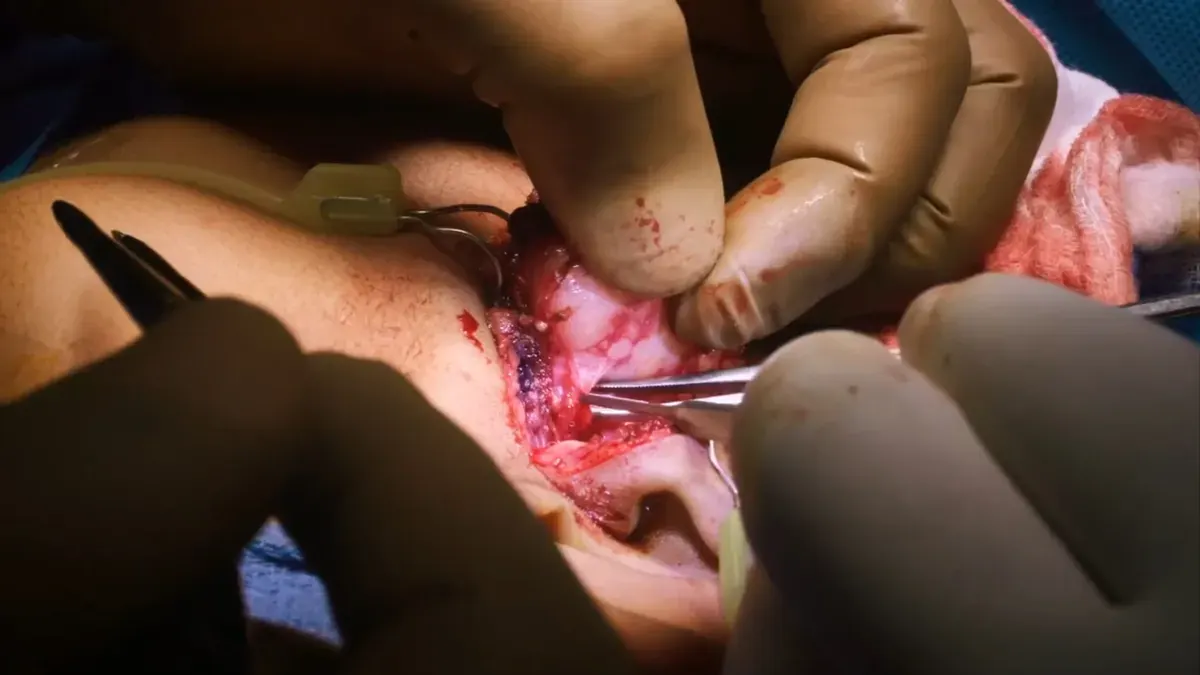
ECD is performed under general anesthesia and requires a high level of surgical precision.
Incision
A small incision is made near the ear, similar to traditional parotid surgery but often more limited.
Tumor Identification
The surgeon carefully identifies the tumor and its capsule.
Dissection Around the Tumor
The tumor is removed by dissecting around its capsule with a margin of healthy tissue. The facial nerve is not routinely exposed, only small nerve branches near the tumor are carefully preserved.
Closure
The incision is closed, often without extensive reconstruction. A drain may or may not be required depending on the case.
Advantages
Benefits of Extracapsular Dissection
Lower Nerve Risk
Less nerve manipulation and lower rates of temporary facial weakness compared to traditional parotidectomy³.
Faster Recovery
Shorter operative time, reduced swelling, and faster return to normal activities.
Better Cosmetics
Smaller incisions and limited tissue removal result in less visible scarring and better facial contour.
Preserved Function
More of the gland is preserved, helping maintain normal saliva production.
Important Information
Risks and Limitations
Tumor Recurrence
Recurrence rates are comparable to traditional parotidectomy when proper technique is used⁴.
Capsular Rupture
If the tumor capsule is disrupted during surgery, tumor cells may spread locally and risk of recurrence increases. This is particularly important for pleomorphic adenomas.
Misdiagnosis
If a tumor believed to be benign is actually malignant, limited surgery may be insufficient. This highlights the importance of accurate preoperative evaluation.
ECD vs. Superficial Parotidectomy
Extracapsular Dissection
- Less invasive
- No routine facial nerve dissection
- Faster recovery
- Best for small benign tumors
Superficial Parotidectomy
- More extensive surgery
- Full facial nerve identification
- Preferred for larger or uncertain tumors
Comparative studies indicate ECD provides similar tumor control with fewer complications in selected patients4.
Results
Long-Term Outcomes
When performed appropriately, extracapsular dissection offers excellent outcomes including low recurrence rates comparable to traditional surgery, lower rates of temporary weakness, and high patient satisfaction with faster recovery and better cosmetic results.
Importance of Surgeon Expertise
Extracapsular dissection is technically demanding and requires careful tumor selection, precise surgical technique, and experience with parotid anatomy. Improper technique can increase the risk of recurrence or complications.
Studies emphasize that ECD should be performed by experienced surgeons familiar with parotid surgery2.
References
- Foresta E et al. Extracapsular dissection versus superficial parotidectomy: outcomes and complications. Acta Otorhinolaryngologica Italica.
- McGurk M et al. Extracapsular dissection for clinically benign parotid lumps: reduced morbidity without oncological compromise. British Journal of Cancer.
- Guntinas-Lichius O et al. Facial nerve outcomes following parotid surgery. Acta Oto-Laryngologica.
- Witt RL. Minimally invasive parotid surgery and recurrence rates. The Laryngoscope.
Patient Education
Frequently Asked Questions
It is a minimally invasive technique used to remove small parotid tumors without full facial nerve dissection.
Yes, when performed in appropriate patients by experienced surgeons, it is safe and effective.
ECD is less invasive and has faster recovery, but is only suitable for select tumors.
Recurrence is rare when the tumor is completely removed, but careful technique is essential.
Patients with small, benign, superficial parotid tumors are the best candidates.
Why Choose OHNI
Not Big Medicine | Personalized, Global Expertise
Many patients assume the best care is found at large, well-known institutions. While these centers offer excellent care, they often operate within standardized systems shaped by regional training models.
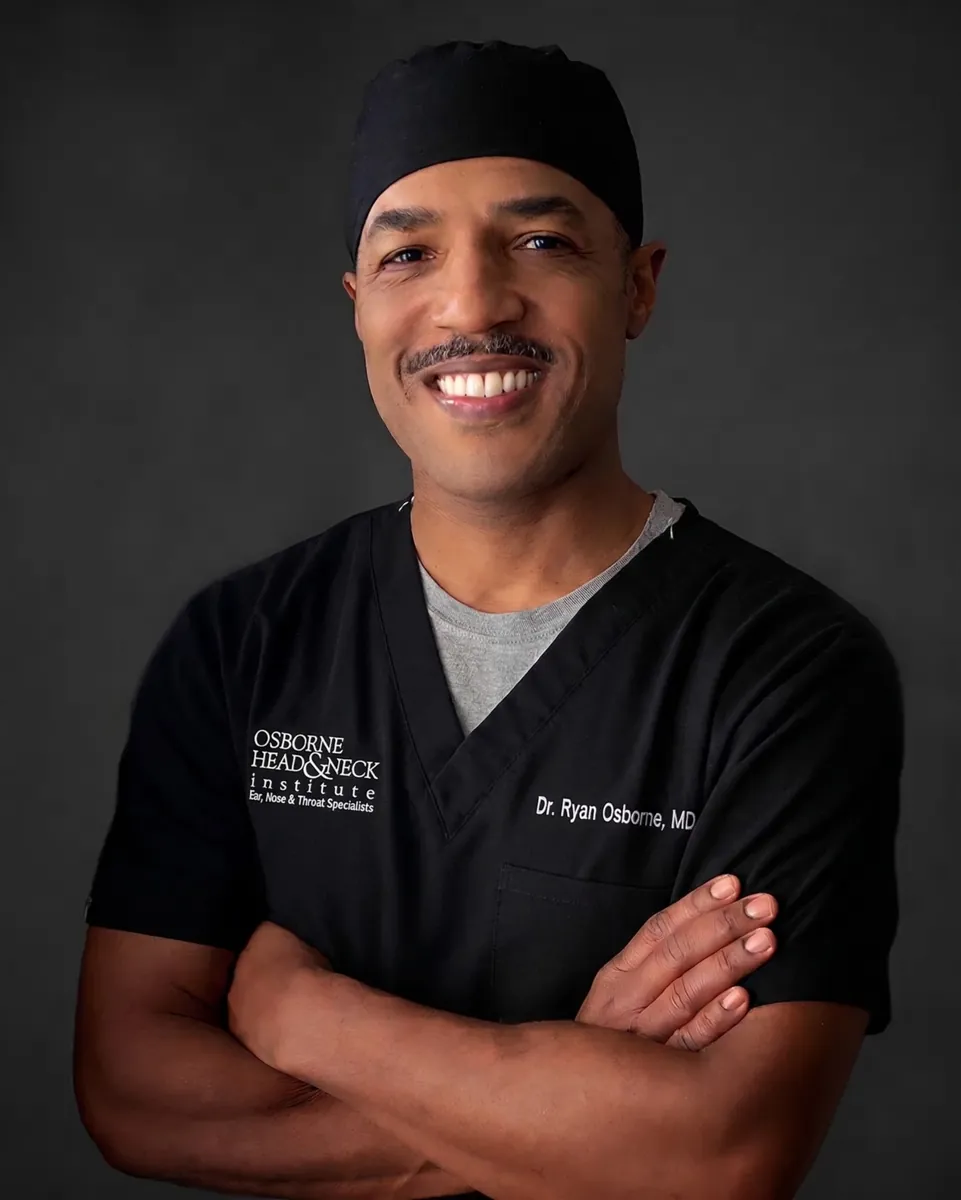
At OHNI, Dr. Ryan Osborne offers something fundamentally different: a truly global perspective combined with highly personalized surgical care with experience across five continents, tailoring each procedure to the individual patient, not the system.
Global Perspective
Experience across five continents, applying diverse surgical philosophies and techniques beyond standard U.S. training.
Precision & Preservation
Specialized techniques like Extra-Capsular Dissection designed to minimize invasiveness while protecting the facial nerve.
Patient-First Care
Direct surgeon access, individualized treatment planning, and a focus on both medical outcomes and quality of life.
Proven Outcomes
Patients consistently highlight clear communication, confident surgical decisions, and excellent functional results.
Expert Parotid Surgery
If you have been diagnosed with a parotid tumor, consulting a specialist will help determine whether extracapsular dissection or a more traditional approach is the best option for your treatment.
Become a Patient
Contact the Osborne Head & Neck Institute for expert parotid surgery consultation.