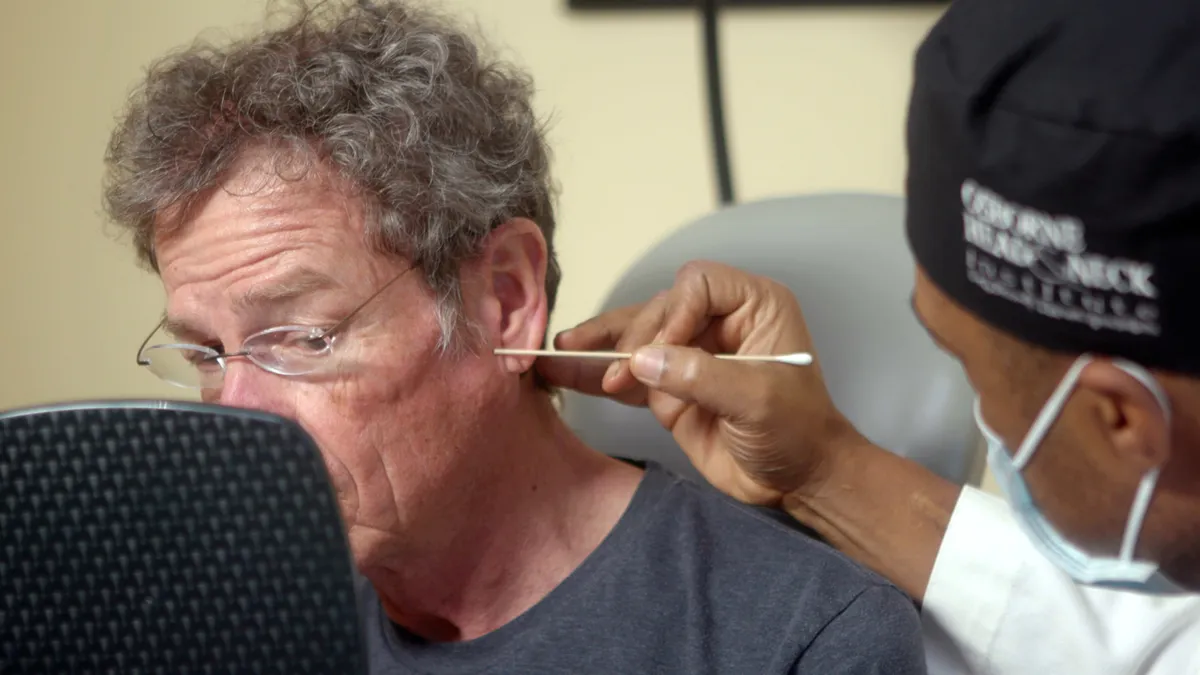
A lump near jaw, ear, or cheek tissue is a common concern that often prompts patients to seek medical evaluation. While many individuals immediately worry about the possibility of a tumor, the reality is more nuanced. Not every lump in this region represents a parotid tumor, and in many cases, the cause is benign or related to non-neoplastic conditions.3
However, because the parotid gland is the most common site of salivary gland tumors, any persistent or unexplained mass in this area warrants careful and structured evaluation. Understanding the possible causes, warning signs, and diagnostic pathways is essential for timely and appropriate care.1,2
Lump Near Jaw Anatomy: Why This Area Matters
The region near the jaw and ear contains several important anatomical structures, including:
- The parotid gland, the largest salivary gland
- Lymph nodes, which respond to infection and inflammation
- The facial nerve, which controls movement of the face
- Adjacent soft tissues, including fat and muscle
Because multiple structures coexist in a relatively small space, a lump in this area may arise from different sources. Identifying the origin of the mass is the first step in determining its significance.
Common Causes of a Lump Near the Jaw
1. Parotid Tumors
Parotid tumors are one of the most important considerations when evaluating a lump near the jaw. These tumors may be:
- Benign, such as pleomorphic adenoma or Warthin's tumor
- Malignant, including mucoepidermoid carcinoma or adenoid cystic carcinoma
Most parotid tumors are benign, but even benign tumors typically require surgical evaluation due to continued growth and, in some cases, risk of transformation.1,2
A key feature of parotid tumors is that they often present as a slow-growing, painless mass near the ear or jaw.1
2. Enlarged Lymph Nodes
Lymph nodes in the neck and parotid region can become enlarged due to:
- Viral or bacterial infections
- Dental issues
- Inflammatory conditions
These lumps are often tender, mobile, and associated with recent illness. In many cases, lymph node swelling resolves over time. However, persistent enlargement should be evaluated further.
3. Salivary Gland Stones (Sialolithiasis)
Obstruction of salivary flow due to stones can cause swelling in the gland, particularly during meals or with salivary stimulation. Patients often describe intermittent swelling that worsens when eating, which is a hallmark of obstructive salivary disease.
4. Parotitis (Inflammation or Infection)
Inflammation of the parotid gland may present as painful swelling, tenderness, and sometimes fever. This may be acute or chronic and is often associated with underlying ductal obstruction or reduced salivary flow.
5. Cysts and Benign Soft Tissue Masses
Other benign causes include epidermoid cysts, lipomas (fatty tumors), and congenital cystic lesions. These are typically slow-growing and non-aggressive but may still require evaluation to confirm diagnosis.
When Is a Lump Concerning?
While many lumps are benign, certain features raise concern for a more serious condition, including malignancy.
Red Flags Include:
- A lump that persists longer than 2–3 weeks
- Facial weakness or asymmetry
- Rapid or progressive growth
- Pain without clear cause
- Fixation (non-movable mass)
- Skin changes overlying the lump
- Numbness in the face, difficulty opening the mouth or trouble swallowing
Among these, facial weakness is particularly significant, as it may indicate involvement of the facial nerve, a key feature associated with malignant parotid tumors.2,4
Facial Weakness: A Critical Symptom
The facial nerve runs directly through the parotid gland. Any tumor or process affecting this nerve may result in drooping of one side of the face, difficulty closing the eye, or asymmetry when smiling.
This symptom should prompt urgent specialist evaluation, as early diagnosis significantly impacts treatment options and outcomes.
How Are Jaw Lumps Evaluated?
Step 1: Clinical Examination
A specialist evaluation begins with detailed history (onset, growth, associated symptoms), physical examination of the mass, and assessment of facial nerve function. This helps determine whether the lump is likely glandular, lymphatic, or soft tissue in origin.
Step 2: Imaging
Imaging plays a central role in evaluation:
- Ultrasound: useful for superficial masses
- MRI: preferred for parotid tumors and deep lobe evaluation
- CT scan: helpful for stones or calcifications
Step 3: Fine Needle Aspiration (FNA)
FNA biopsy provides cytologic information, helps distinguish benign from malignant disease, and guides surgical planning. While not always definitive, it is an essential tool in the diagnostic pathway.5
Treatment Options for a Lump Near the Jaw
Not all jaw lumps are treated the same way. Treatment depends entirely on the underlying cause:
- For Parotid Tumors: Surgical removal (parotidectomy), aiming for complete tumor removal, preservation of the facial nerve and prevention of recurrence
- For Malignant Tumors: Surgery, radiation therapy when indicated, and multidisciplinary care
- For Salivary Stones: Minimally invasive procedures (sialendoscopy)
- For Inflammatory Conditions or Infections: Medical therapy, including antibiotics for infection
- For Lymph Nodes: Observation or treatment of infection
- For Small, Stable Benign Lumps: Observation with follow-up
This highlights the importance of accurate diagnosis before treatment.
Why Early Evaluation Matters
Delaying evaluation of a persistent lump can lead to tumor growth, increased surgical complexity, greater risk to the facial nerve, and missed opportunity for minimally invasive treatment.3,4
Early diagnosis allows for more treatment options, better outcomes, and reduced complication risk.4
The Role of Specialist Care
Salivary gland disorders, particularly those involving the parotid gland, require a high level of expertise due to complex anatomy, facial nerve involvement, and a wide range of possible diagnoses.
A specialist in salivary gland disease can provide accurate diagnosis, advanced imaging interpretation, and minimally invasive treatment options when appropriate.
When to Seek Medical Attention
You should seek evaluation if you notice:
- A persistent lump near the jaw or ear
- Swelling that does not resolve
- Facial weakness
- Pain or rapid growth
Early evaluation allows for more precise diagnosis and more effective treatment.
Summary
A lump near the jaw is not always a parotid tumor, but it is a symptom that should not be ignored. The causes range from benign and self-limited conditions to tumors requiring specialized care.
The key to appropriate management lies in accurate diagnosis, which involves clinical evaluation, imaging, and sometimes biopsy. With early and expert assessment, most conditions affecting the parotid region can be managed effectively with excellent outcomes.
A lump near jaw, ear, or neck region that lasts beyond two to three weeks should be examined.