Osborne Head & Neck Institute | Los Angeles
Mucocele
A Comprehensive Guide to Salivary Gland Mucus Retention Lesions
Ryan F. Osborne, MD | Fellowship-Trained Head & Neck Surgical Oncologist
Medically Reviewed By: OHNI Clinical Staff · Last Updated: November 3, 2026
Anatomy
Understanding the Salivary System
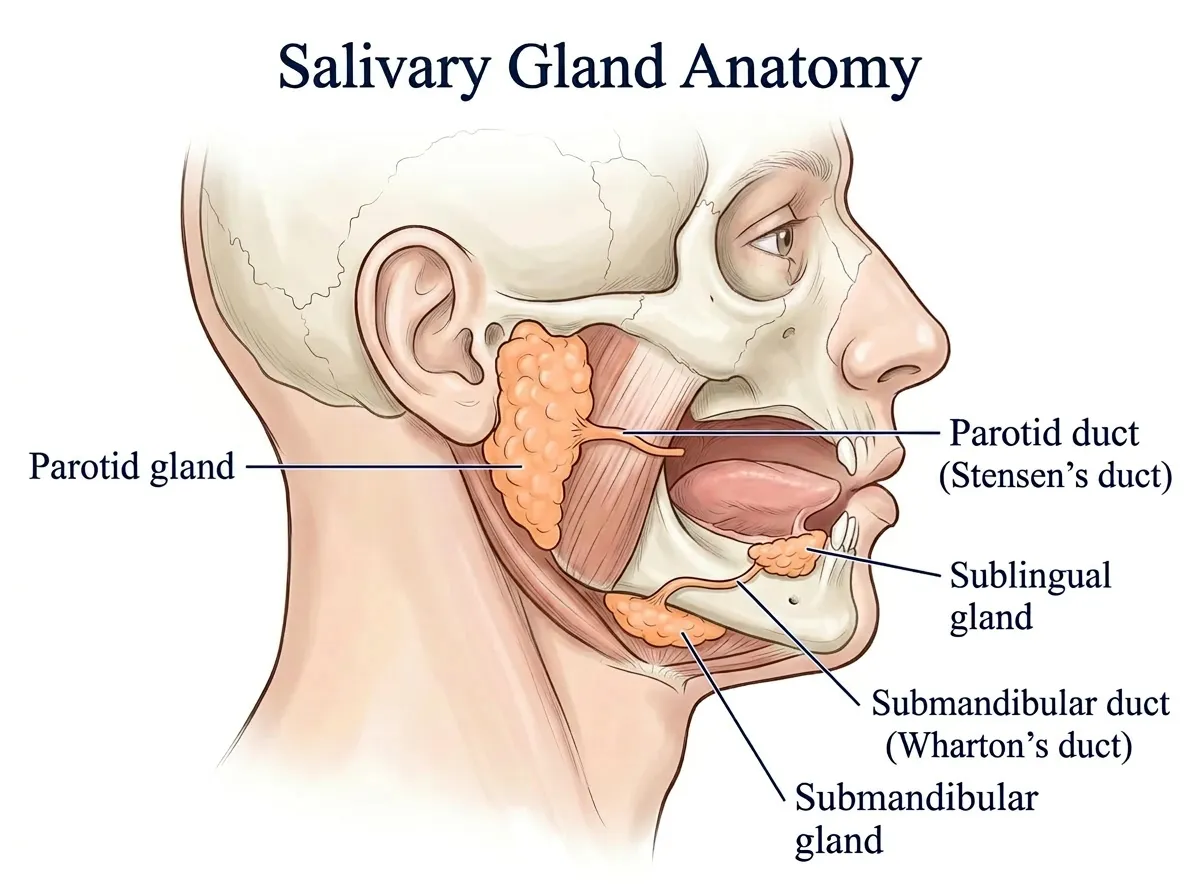
A mucocele is a harmless, fluid-filled swelling that forms when a minor salivary gland duct is damaged or blocked, most often on the lower lip. The oral cavity contains major salivary glands (parotid, submandibular, sublingual) and minor salivary glands distributed throughout the lips, cheeks, palate, and tongue. These glands continuously produce saliva, which aids digestion, lubricates oral tissues, and protects against infection.
Saliva travels through small ducts into the mouth. When these ducts are damaged or blocked, saliva cannot drain properly, leading to conditions like mucoceles.
Overview
What Is a Mucocele?
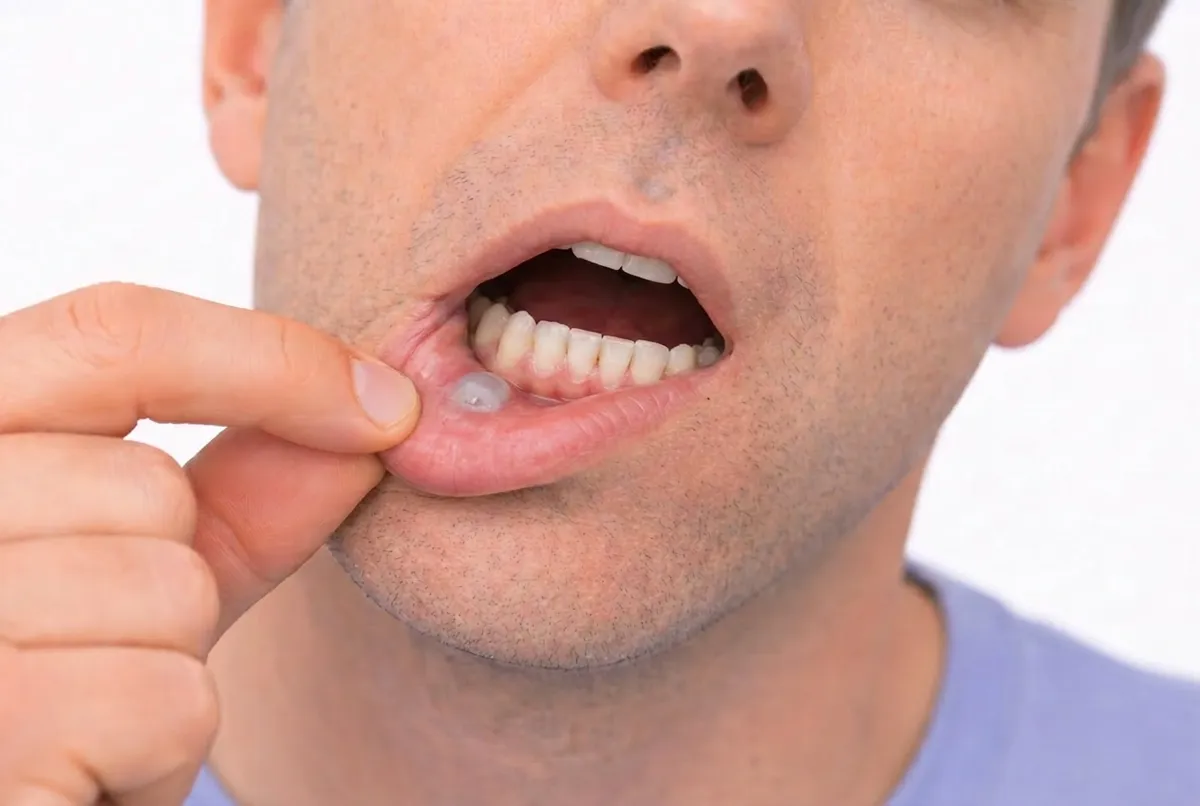
A mucocele is a common, benign lesion that arises from the minor salivary glands within the oral cavity. It develops when normal saliva flow is disrupted, either due to trauma or obstruction, causing mucus to accumulate in surrounding tissues.
Unlike true cysts, mucoceles are classified as pseudocysts, meaning they do not have a true epithelial lining. Instead, the body forms a reactive wall around pooled mucus, resulting in a soft, fluid-filled lesion.
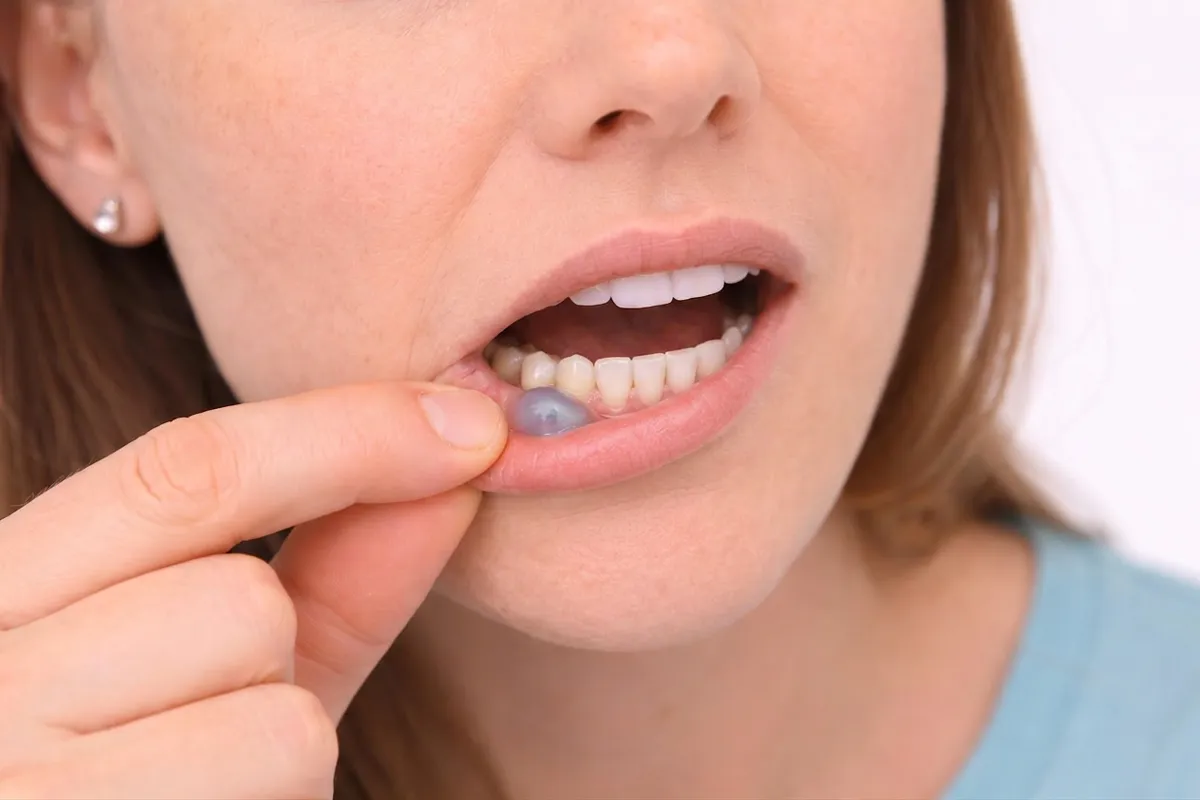
Clinically, Mucoceles Appear As:
- Smooth, dome-shaped swellings
- Bluish or translucent lesions
- Soft, fluctuant masses under the mucosa
Pathogenesis
How a Mucocele Forms
Mucoceles develop through a predictable biological process that results in a visible, fluid-filled lesion.
Duct Injury
Trauma or blockage disrupts normal saliva flow
Saliva Leakage
Saliva accumulates in surrounding tissues
Mucus Buildup
Mucus components are not easily reabsorbed
Inflammation
The body recognizes the accumulation as abnormal
Pseudocyst Forms
A fibrous wall forms around the mucus
Etiology
Causes of Mucocele
1. Trauma to Salivary Glands or Ducts
Physical injury is one of the most common causes. Trauma damages the duct, allowing saliva to leak into surrounding tissue.
- Lip biting (especially lower lip)
- Facial injury or dental procedures
- Sports-related injuries
- Motor vehicle accidents
2. Duct Obstruction
Mucoceles can also develop without trauma. Saliva builds up behind the blockage and eventually escapes into nearby tissue.
- Mucus plugs
- Scar tissue
- Inflammation
- Narrowed ducts
Anatomy
Common Locations
Mucoceles can occur anywhere minor salivary glands are present, but certain locations are more common.
- Lower lip (most frequent site)
- Inner cheeks (buccal mucosa)
- Floor of the mouth
- Tongue
- Soft palate
Lesions on the floor of the mouth are sometimes referred to as ranulas, a specific type of mucocele that may require specialized treatment.
Clinical Presentation
Symptoms of Mucocele
Most mucoceles are painless, but symptoms can vary depending on size and location.
Fluid-Filled Swelling
Soft, dome-shaped lesion with bluish or translucent appearance
Fluctuating Size
May shrink and recur repeatedly over time
Functional Impact
Larger mucoceles may interfere with speaking, chewing, or swallowing
Recurrent Behavior
Often rupture spontaneously, temporarily resolve, then refill and recur
Assessment
Are Mucoceles Dangerous?
Mucoceles are not considered dangerous and are rarely associated with serious complications. However, they can cause discomfort, interfere with oral function, become a cosmetic concern, and recur repeatedly if not treated properly.
Importantly, some lesions that resemble mucoceles may represent other conditions. For this reason, accurate diagnosis is essential.
Diagnosis
Diagnosis is typically straightforward, based on patient history, visual examination, and the location and appearance of the lesion.
Additional Evaluation May Be Needed To:
- Rule out salivary gland tumors
- Evaluate atypical lesions
- Confirm diagnosis in recurrent cases
Expert Care
Why Specialist Care Matters
Although mucoceles are common, they are frequently mismanaged. A key issue is recurrence, simply draining the lesion does not treat the underlying cause, and without addressing the source, the mucocele is likely to return.
Accurate Diagnosis
Understand the underlying pathology and distinguish mucoceles from tumors or other lesions.
Source Identification
Identify the source of obstruction or ductal injury driving recurrent salivary leakage.
Definitive Treatment
Provide treatment strategies that prevent recurrence rather than temporary drainage.
Management
Treatment of Mucocele
Effective treatment focuses on eliminating the source of the problem. Drainage alone does not address the damaged duct or the source of mucus leakage.
Surgical Excision
The most common and reliable treatment. Involves removal of the mucocele and the affected minor salivary gland, preventing recurrence and providing definitive resolution.
Marsupialization
In select cases, especially larger lesions, the lesion is opened and sutured to create continuous drainage, allowing healing from within.
Advanced Techniques
Depending on the case, treatment may include laser excision, microsurgical techniques, or minimally invasive approaches.
Risk of Recurrence
Mucoceles are associated with a high recurrence rate if not treated properly. Factors that increase recurrence include incomplete removal, failure to remove the affected gland, and repeated trauma to the area.
Proper treatment by a specialist significantly reduces this risk.
Who Is at Risk?
Mucoceles can affect individuals of all ages. However, mucoceles can also occur spontaneously in otherwise healthy individuals.
Higher Risk Groups:
- Children and young adults
- Individuals prone to lip biting
- Patients with a history of facial trauma
- Individuals with prior oral surgery
Mucocele vs Other Oral Lesions
It is important to distinguish mucoceles from other conditions that may appear similar. Accurate diagnosis ensures appropriate treatment.
Conditions That May Mimic Mucocele:
- Salivary gland tumors
- Fibromas
- Cysts
- Vascular lesions
Our Approach
Treatment Philosophy
Address the Cause, Not Just the Symptoms
At its core, mucocele management is about understanding why the lesion formed. Temporary solutions focus on symptoms. Definitive treatment focuses on restoring normal salivary flow and eliminating the source of mucus accumulation.
Precision Matters
Successful treatment requires accurate diagnosis, careful surgical technique, and preservation of surrounding structures.
Minimizing Recurrence
The goal is not just removal, but long-term resolution through complete treatment of the affected gland.
Expert Care
Expertise in salivary gland pathology and avoidance of unnecessary tissue damage are essential.
Next Steps
When to Seek Evaluation
Early evaluation ensures accurate diagnosis, appropriate treatment, and prevention of recurrence. Consider specialist evaluation if you notice any of the following:
PATIENT EDUCATION
Mucocele FAQs
A mucocele is a mucus-filled pseudocyst caused by disruption of normal saliva flow due to trauma or obstruction.
No. Mucoceles are classified as pseudocysts because they lack a true epithelial lining.
Some may temporarily resolve, but recurrence is common without proper treatment.
Yes. Drainage alone does not treat the underlying cause, so recurrence is likely.
A salivary gland specialist is best qualified to diagnose and treat mucoceles effectively.
Prevention may include avoiding repetitive trauma (e.g., lip biting), protecting the face during sports, and prompt treatment of oral injuries.

Why Choose OHNI
Not Big Medicine | Personalized, Global Expertise
Many patients assume the best care is found at large, well-known institutions. While these centers offer excellent care, they often operate within standardized systems shaped by regional training models.
At OHNI, Dr. Ryan Osborne offers something fundamentally different: a truly global perspective combined with highly personalized surgical care with experience across five continents, tailoring each procedure to the individual patient, not the system.
Global Perspective
Experience across five continents, applying diverse surgical philosophies and techniques beyond standard U.S. training.
Precision & Preservation
Specialized techniques like Extra-Capsular Dissection designed to minimize invasiveness while protecting the facial nerve.
Patient-First Care
Direct surgeon access, individualized treatment planning, and a focus on both medical outcomes and quality of life.
Proven Outcomes
Patients consistently highlight clear communication, confident surgical decisions, and excellent functional results.
Concerned About a Mucocele?
Our specialists provide accurate diagnosis and definitive treatment for mucoceles and other salivary gland conditions. Schedule a consultation today.
Become a Patient
Contact the Osborne Head & Neck Institute for expert evaluation and surgical planning.