Osborne Head & Neck Institute, Los Angeles
Sixteen Years With a Six-Pound Tumor
T.R.'s Complex Parotidectomy and Return to Normal Life
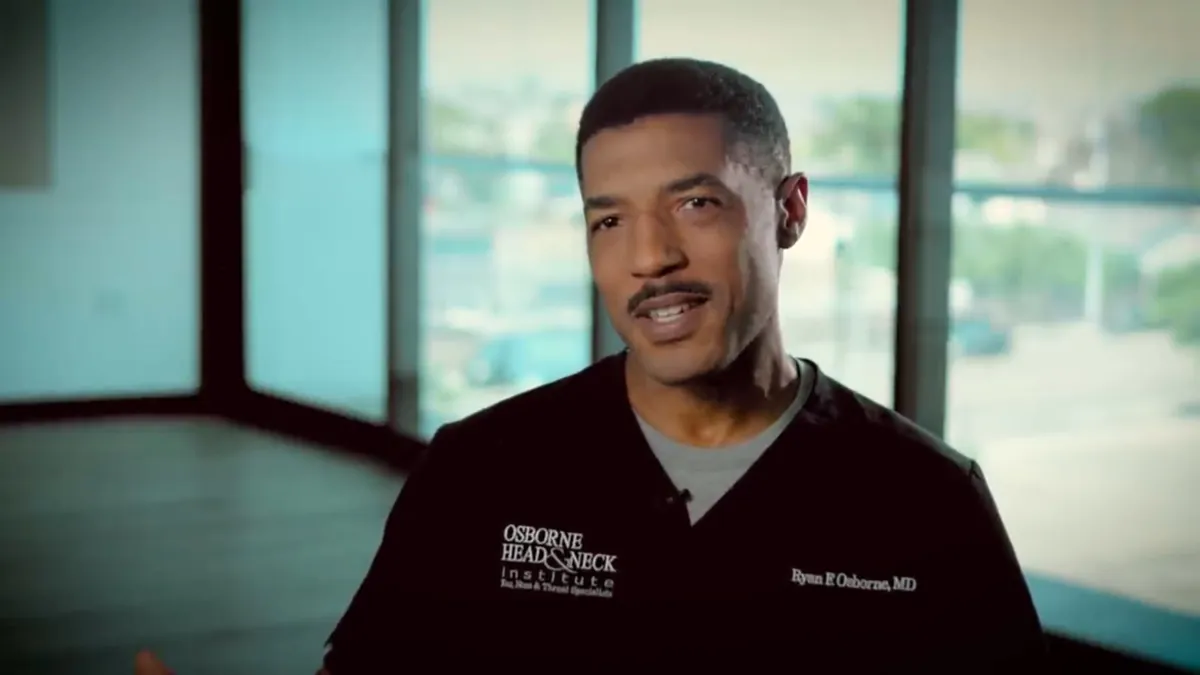
Ryan F. Osborne, MD, FACS | Director of Head & Neck Surgery, Osborne Head & Neck Institute
Medically Reviewed By: OHNI Clinical Staff · Last Updated: October 6, 2026
Abstract
Parotid tumors can range from relatively small, localized lesions to massive tumors that profoundly distort the anatomy of the face and neck. Because the facial nerve travels directly through the parotid gland, increasing tumor size can create substantial surgical challenges involving facial nerve preservation, vascular control, tumor removal, and reconstruction.1,2,3,4
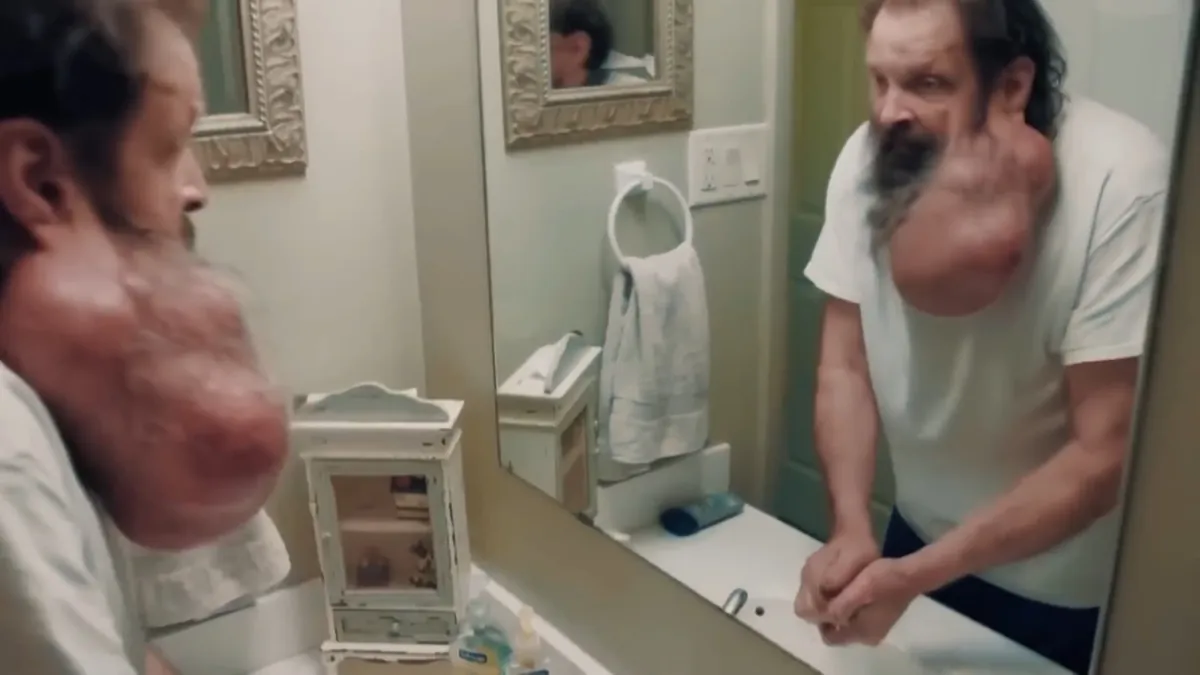
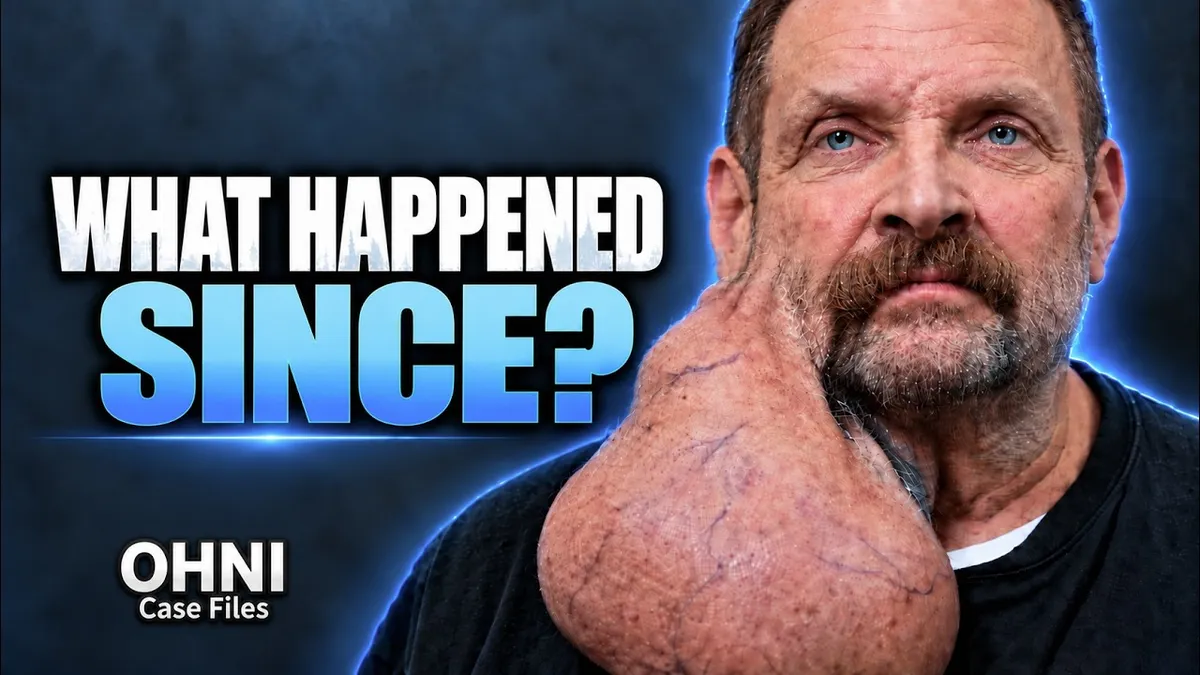
This case describes the treatment of T.R., a Scottsdale, Arizona resident who lived with a progressively enlarging tumor along the side of his face and upper neck for approximately 16 years. What began as a small, firm bump eventually grew into an enormous mass weighing approximately six pounds. T.R. adapted to the tumor for years, continuing to work on automobiles despite daily headaches and increasing physical limitations.
Limited access to care and the extraordinary size of the tumor delayed definitive treatment. By the time T.R. came to my attention, the mass had changed significantly and required surgical removal.
Following successful surgery, T.R. returned to his work, his community, and the physical activities that had become increasingly difficult before treatment. At follow-up more than a year later, there was no clinical evidence of regrowth.
T.R.'s case demonstrates both the remarkable ability of patients to adapt to slowly progressive disease and an equally important surgical principle: a tumor should not have to become extraordinary before a patient can receive the care necessary to remove it.
Introduction
The parotid glands are the largest major salivary glands and occupy an anatomically complex region immediately in front of and below the ear. Most parotid tumors are benign, but benign pathology does not necessarily mean that a tumor is insignificant.1,2
A parotid tumor can continue to enlarge over time. As its dimensions increase, the mass may distort normal anatomy, alter facial and neck contour, interfere with physical activity, and make surgical removal progressively more complex.
The facial nerve is one of the principal reasons.
After exiting the skull at the stylomastoid foramen, the facial nerve enters the parotid gland and divides into branches responsible for facial movement. The surgeon must therefore operate within an anatomical region in which tumor removal and preservation of facial function are inseparably connected.1,3
Research has demonstrated a relationship between increasing parotid tumor diameter and proximity to the facial nerve. In one study, tumors measuring 5 cm or larger were particularly likely to have tumor tissue extending to the facial nerve margin.3 Large contemporary series have similarly identified tumor size, location, malignant pathology, and the extent of surgery as important factors affecting postoperative facial nerve outcomes.4
T.R.'s tumor had progressed far beyond the dimensions normally encountered in routine parotid surgery.
It had been growing for approximately 16 years.
By the time it was removed, it weighed approximately six pounds.
Patient History
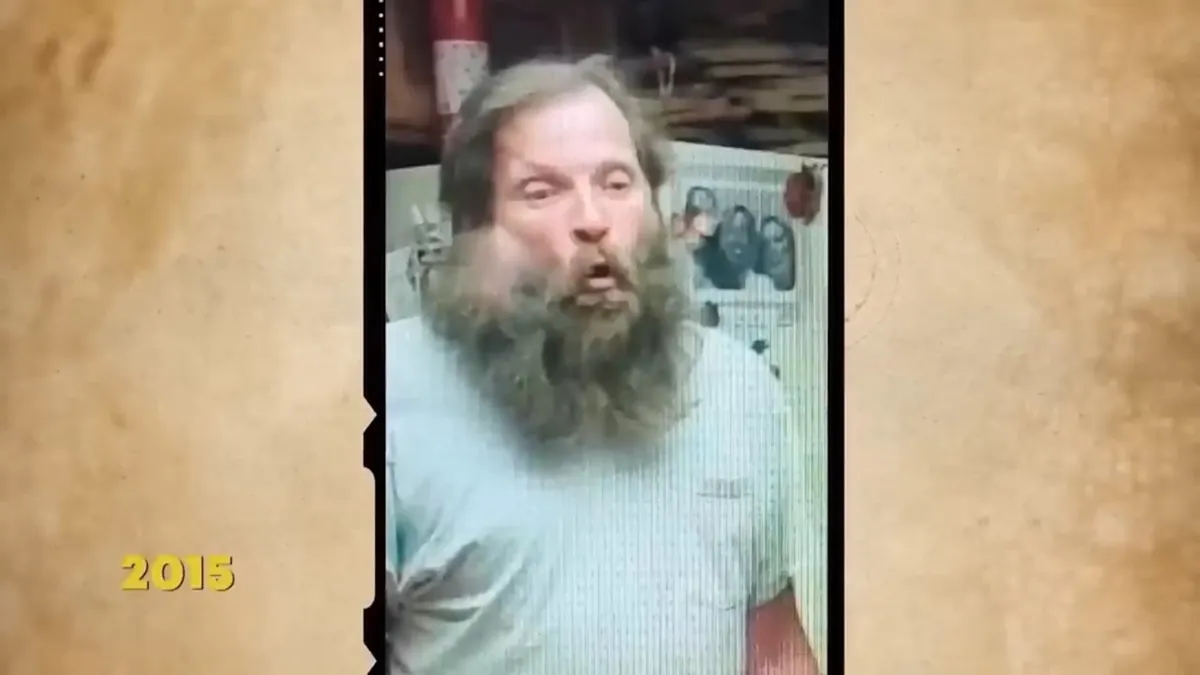
T.R. lives in Scottsdale, Arizona.
He first noticed the abnormality around 2007.
It did not begin as a massive tumor.
T.R. described it as something resembling a hard pimple on the side of his face. He tried squeezing it, but nothing happened. Eventually he forgot about it.
Months later, it was larger.
Over time, T.R. watched the mass progress through a series of comparisons that illustrate just how slowly this process unfolded.
A pimple became something closer to the size of a pea.
Then a small ball.
Then a golf ball.
Eventually, there was no question that something significant was growing along the side of his face and neck.
T.R. sought medical attention, but obtaining definitive treatment became difficult. Without adequate insurance and financial resources, he found himself moving through a fragmented referral process.
One physician would tell him to see an ENT.
That would begin another sequence of appointments and referrals.
Meanwhile, the tumor continued growing.
T.R. reported undergoing a biopsy in approximately 2010 and recalled being told that the lesion was vascular. He also described episodes in which the tumor bled significantly when injured.
But definitive removal still did not happen.
And the tumor kept growing.
Sixteen Years of Adaptation
One of the remarkable things about T.R.'s story is how thoroughly he adapted to something that, from the outside, appeared impossible to ignore.
The tumor eventually became enormous.
Yet T.R. continued working.
He worked on automobiles, which meant climbing beneath vehicles, leaning into engine compartments, maneuvering through wheel wells, and placing his body into confined spaces.
The tumor increasingly made those movements difficult.
T.R. described it almost as attempting to fit "two heads" into the same workspace.
Eventually, he began turning away jobs because he physically could not position himself where he needed to work.
The tumor was no longer simply changing his appearance.
It was affecting his livelihood.
He also reported experiencing headaches nearly every day during the years he lived with the mass.
Despite these limitations, T.R. continued functioning.
Human beings are extraordinarily good at adapting to slowly progressive problems. When something changes a little at a time, patients often reorganize their lives around the disease without realizing how much they have surrendered to it.
T.R. did exactly that.
From his perspective, the tumor was frequently "out of sight, out of mind."
Then he saw a side-view photograph of himself.
That perspective changed things.
He could finally appreciate just how far the tumor extended from his face and neck.
It needed to come out.
Finding a Path to Treatment
T.R.'s eventual route to treatment was unusual.
A friend submitted photographs of his tumor to the television program associated with dermatologist Dr. Sandra Lee. Through that process, T.R.'s case ultimately reached me.
By then, this was not a routine parotid mass.
It was a massive tumor that had been growing for well over a decade.
The question was no longer whether the tumor was noticeable.
The question was whether it could be removed safely.
When I evaluated T.R.'s case, I believed it could.
That was important to him because previous encounters had left him without a clear path forward. T.R. recalled that other physicians had essentially reached a standstill. No one had given him the confidence that definitive removal was achievable.
I told him I was comfortable moving forward with surgery.
Then the tumor itself began changing.
A Tumor That Could No Longer Wait
T.R. noticed that the mass had become softer.
He could press on one portion of the tumor and see changes elsewhere along his face.
During a conference call, we discussed what he was experiencing.
My concern was that the tumor was beginning to break down internally.
At that point, waiting was no longer an attractive option.
After approximately 16 years of growth, it was time for the tumor to come out.
Within roughly a month, T.R. was on the operating table.
Clinical Considerations in a Massive Parotid Tumor
Parotidectomy is fundamentally different from removing a superficial lump elsewhere on the body.
The facial nerve traverses the parotid gland, and its relationship with a tumor must be considered during surgical planning.1,2
For smaller benign tumors, several operations may be appropriate, including extracapsular dissection, partial superficial parotidectomy, superficial parotidectomy, or more extensive surgery depending upon tumor location and pathology.1,2
The equation changes as tumor size increases.
Research evaluating the tumor-facial nerve relationship found that increasing tumor diameter correlated with greater likelihood of tumor proximity to the facial nerve.3
This is clinically important because facial nerve dysfunction remains one of the most significant complications of parotid surgery. A large multicenter analysis of 2,650 patients found facial nerve palsy in approximately 20% of patients overall, with most cases transient. Larger tumors, particularly those exceeding 4 cm, were among the factors associated with more extensive or persistent facial nerve impairment.4
T.R.'s tumor was dramatically larger than these conventional size categories.
Surgery therefore required careful consideration of:
Facial nerve identification and preservation.
The altered anatomy created by years of tumor growth.
Control of the tumor's vascular supply.
Safe separation of the mass from surrounding structures.
Removal of an extraordinarily large volume of tissue.
Management of the resulting soft-tissue defect.
Postoperative surveillance for recurrence.
When anatomy has been distorted for more than a decade, a surgeon cannot assume that structures will remain exactly where a textbook says they should be.
You have to understand the anatomy well enough to recognize it even when the tumor has completely changed the landscape.
Surgical Management
T.R. underwent surgical removal of the massive parotid-region tumor.
The procedure required deliberate dissection through anatomy that had been progressively altered by approximately 16 years of tumor growth.
In parotid surgery, preserving facial function whenever medically appropriate is a fundamental objective. Even conventional parotidectomy carries a recognized risk of temporary facial weakness, with risk influenced by the extent of surgery, tumor location, pathology, and relationship between the tumor and facial nerve.2,4,5
A review of 633 patients undergoing surgery for benign parotid tumors reported transient facial nerve dysfunction in approximately 21% of primary cases, while permanent weakness was uncommon.5 Other studies have demonstrated that tumors located deep within the gland and tumors requiring more extensive operations can carry greater temporary facial nerve risk.5,6
With a tumor of T.R.'s magnitude, these anatomical considerations were amplified.
The mass was successfully removed.
Ultimately, it weighed approximately six pounds.
Something that had grown with T.R. for 16 years was finally gone.
Recovery and Return to Work

The most revealing part of T.R.'s outcome came after surgery.
Without the tumor, activities that had gradually become difficult were suddenly easier.
Working on cars no longer meant attempting to maneuver an enormous mass through confined spaces.
He could move more naturally.
He could position himself around vehicles more effectively.
He could perform his work with less effort.
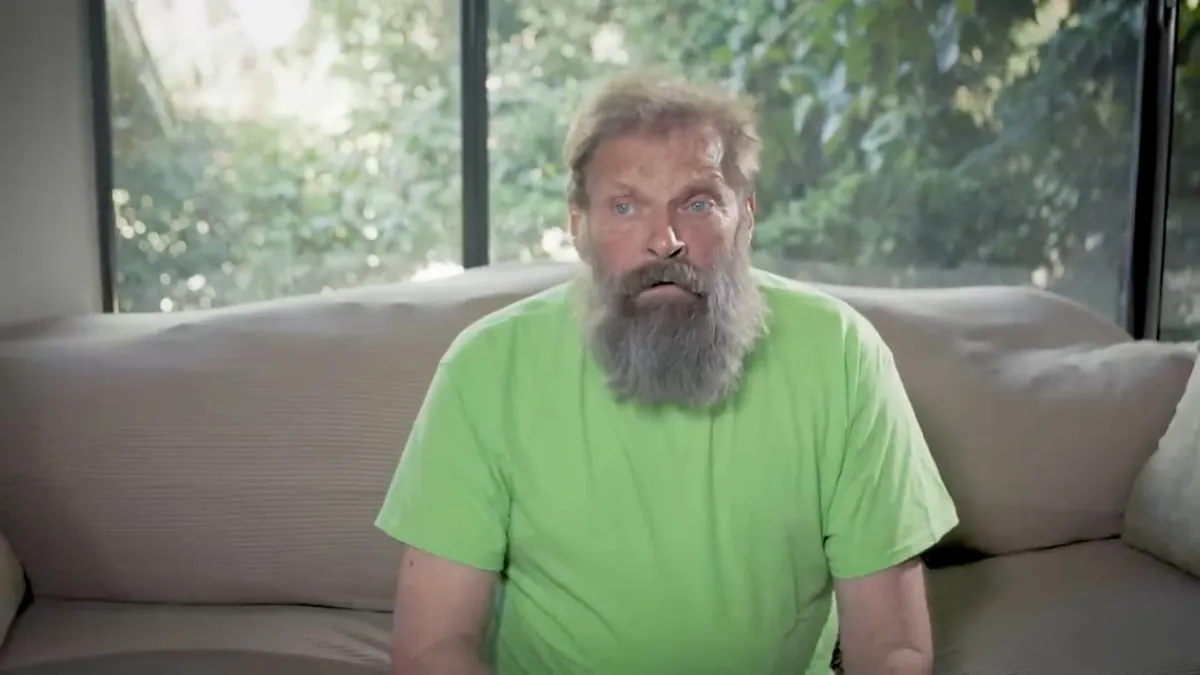
When I saw T.R. again more than a year after surgery, the transformation was striking.
In fact, when I arrived at his home in Arizona, he initially gave me a small scare.
The last time I had seen him, he was clean-shaven and the absence of the tumor was obvious.
Now he had grown a full beard.
For a moment, I wondered whether he might be using the beard to conceal recurrent growth.
He wasn't.
There were no clinical signs of regrowth.
The beard was simply T.R.'s new style.
And T.R. was still T.R..
The tumor was gone.
His sense of humor was not.
Long-Term Follow-Up
Follow-up is an important component of parotid tumor management.
The appropriate surveillance strategy depends upon final pathology, completeness of excision, tumor characteristics, and other individual clinical factors.
For benign parotid tumors, recurrence risk varies considerably by histology and surgical technique. Contemporary reviews report low recurrence rates for appropriately selected and adequately treated benign tumors, although prolonged surveillance may be appropriate for tumor types capable of late recurrence.2
Because the source material for this case does not reliably identify the final histopathologic diagnosis, it would be inappropriate to assign a specific recurrence rate to his case.
What can be said is that follow-up was part of the plan.
At the filmed visit more than a year after his operation, I examined T.R. and found no clinical evidence that the mass was returning.
After living with a six-pound tumor for approximately 16 years, that was an important milestone.

More Than a Surgical Outcome
Something else happened after T.R.'s surgery that says a great deal about him.
His experience made him notice other people who were living with untreated disease.
During my follow-up visit, T.R. repeatedly told me about a woman in his community named Holly who had a very large neck mass.
He wanted her to get help.
He had experienced what it was like to live for years with a tumor, to have difficulty accessing treatment, and to wonder whether anyone would actually be willing to take responsibility for a complicated case.
Now that his tumor was gone, he wanted someone else to have the same opportunity.
We went to meet her.
That moment became one of the most meaningful parts of my visit with T.R..
Medicine works at its best when helping one patient creates the opportunity to help another.

Discussion
T.R.'s case demonstrates several important principles in the management of very large parotid and parotid-region tumors.
1. Benign Does Not Necessarily Mean Harmless
The majority of parotid tumors are benign.1,2
But benign describes biological behavior. It does not describe the impact a tumor may have on someone's life.
A benign tumor can become physically enormous. It can interfere with work, movement, appearance, sleep, comfort, and social interaction.
T.R. lived with daily headaches and eventually had difficulty physically positioning himself to perform his job.
Whether a tumor is malignant is critically important.
But it is not the only measure of whether a tumor is causing harm.
2. Tumor Size Matters
Large parotid tumors present different surgical challenges than small lesions.
Tumor size has been correlated with proximity to the facial nerve.3 Contemporary clinical data also identify large tumor size as a factor associated with postoperative facial nerve dysfunction.4
As a tumor grows, it may displace normal structures and change the anatomy that the surgeon must navigate.
T.R.'s six-pound tumor represented an extreme example of that problem.
3. Facial Nerve Preservation Remains Central to Parotidectomy
The facial nerve is inseparable from the surgical anatomy of the parotid gland.
Published literature consistently identifies facial nerve dysfunction as one of the major potential morbidities of parotid surgery.1,4,5,6
Most postoperative weakness following surgery for benign disease is temporary, but the risk varies according to tumor location and the extent of surgery.4,5,6
The objective is therefore not simply to remove the tumor.
It is to remove the tumor while protecting facial function whenever the disease and anatomy allow it.
4. Delayed Treatment Can Transform the Surgical Problem
T.R.'s tumor began as something resembling a small, firm bump.
Sixteen years later, it weighed approximately six pounds.
His experience illustrates why enlarging parotid and upper-neck masses warrant appropriate evaluation rather than indefinite observation without a diagnosis or treatment strategy.
Earlier treatment cannot guarantee a simpler operation in every patient. Tumor biology, location, and pathology remain important.
But a tumor that is allowed to become enormous inevitably creates anatomical and functional considerations that did not exist when it was small.
5. Patients Adapt More Than We Realize
When I saw T.R. working on cars after surgery, I found myself wondering how he had ever done it with the tumor.
The answer is simple.
He adapted.
People are remarkably resilient.
They change how they stand.
They change how they work.
They change how they get into a car.
They change which jobs they accept.
Eventually, those adaptations become normal.
Sometimes it is only after successful treatment that a patient realizes how abnormal life had become.
Conclusion
When I look at T.R. today, it is difficult to imagine the tumor that once occupied the side of his face and neck.
For approximately 16 years, that tumor grew with him.
It progressed from something resembling a small pimple to a mass weighing approximately six pounds. T.R. developed daily headaches. It interfered with his ability to work on cars. Eventually he began turning away jobs because he simply could not maneuver his body and the tumor into the spaces where he needed to work.
Yet he kept going.
That resilience is part of T.R.'s story.
But patients should not have to prove how much they can tolerate before they receive help.
When the opportunity finally came, we removed the tumor.
More than a year later, I traveled to Arizona to see T.R. again. There was no clinical evidence of regrowth. He was working, joking, and living his life without the massive tumor he had carried for so many years.
And then T.R. did something even more meaningful.
He tried to help someone else.
He used his experience to recognize another person in his community who needed medical attention and pushed us to meet her.
That is where T.R.'s story becomes about more than parotid surgery.
A successful operation gave one patient his mobility and normal life back.
That patient then tried to give someone else the same opportunity.
Sometimes the impact of surgery extends far beyond the operating room.
T.R.'s case is one of those times.
Watch the Full Story
Watch T.R.'s Journey
See T.R. describe the 16 years he lived with the tumor, the surgery that removed it, and the life he returned to afterward.
References
- Larian B. Parotidectomy for Benign Parotid Tumors. Otolaryngologic Clinics of North America. 2016;49(2):395-413. doi:10.1016/j.otc.2015.10.006.
- Borumandi F, George KS, Cascarini L. Parotid Surgery for Benign Tumours. Oral and Maxillofacial Surgery. 2012;16(3):285-290. doi:10.1007/s10006-012-0352-7.
- Domenick NA, Johnson JT. Parotid Tumor Size Predicts Proximity to the Facial Nerve. Laryngoscope. 2011;121(11):2366-2370. doi:10.1002/lary.22335.
- Warda A, et al. Facial Nerve Palsy in Parotid Gland Surgery: A Comprehensive Analysis of Incidence, Severity, Duration, and Risk Factors; Insights From the Polish Salivary Network Database. Journal of Cranio-Maxillofacial Surgery. 2026. doi:10.1016/j.jcms.2026.104497.
- Kawata R, Terada T, Lee K, Higashino M, Ichihara S. Surgical Management for Benign Parotid Tumors: Review of a 16-year Experience with 633 Patients. Nihon Jibiinkoka Gakkai Kaiho. 2016;119(3):196-203. doi:10.3950/jibiinkoka.119.196.
- Gaillard C, Périé S, Susini B, et al. Facial Nerve Dysfunction After Parotidectomy: The Role of Local Factors. Laryngoscope. 2005;115(2):287-291. doi:10.1097/01.mlg.0000154735.61775.cd.