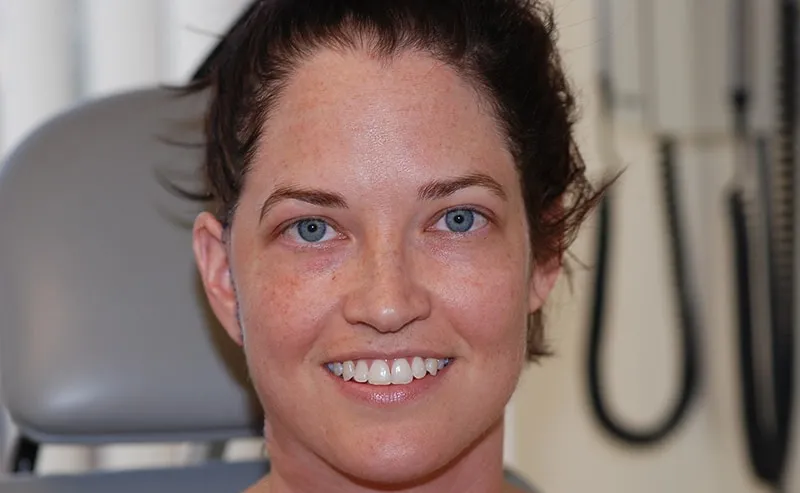
Osborne Head & Neck Institute, Los Angeles
Finding the Right Surgeon
J.M.'s Journey to Parotid Tumor Removal and Facial Nerve Preservation
Ryan F. Osborne, MD | Director of Head & Neck Surgery, Osborne Head & Neck Institute
Medically Reviewed By: OHNI Clinical Staff · Last Updated: November 5, 2026
Case Summary
Abstract
Parotid tumors present a distinctive surgical challenge because the facial nerve passes directly through the parotid gland and divides into branches responsible for facial expression. Successful parotid surgery therefore requires more than removal of a mass. The surgeon must balance complete and controlled tumor removal with preservation of facial nerve function, avoidance of tumor disruption, and restoration of normal facial contour.¹
This case describes the surgical treatment of J.M., a woman who first noticed a small mass behind her ear in 2004. Over several years, she underwent an initial procedure and consultations with multiple physicians but continued to receive conflicting explanations regarding her diagnosis and treatment. As the mass became increasingly visible along the side of her face, it affected how she wore her hair, whether she wore earrings, and ultimately how she saw herself.
After extensive research, J.M. traveled from Colorado to Los Angeles for evaluation at Osborne Head & Neck Institute. Following imaging and surgical planning, she underwent definitive parotid tumor removal. Immediately after surgery, facial movement was intact. Within two days she reported minimal discomfort, required only limited pain medication, and described seeing her normal facial appearance again for the first time in years.
J.M.'s case illustrates an important principle of parotid surgery: the goal is not simply to remove a tumor. It is to remove it correctly while preserving the facial nerve and helping the patient reclaim normal function, appearance, and confidence.
Background
Introduction
The parotid glands are the largest of the major salivary glands and are located immediately in front of and below each ear. Parotid tumors encompass a broad spectrum of benign and malignant lesions, although the majority of parotid neoplasms are benign.¹
Their location creates an important anatomical problem for the surgeon.
The facial nerve exits the skull near the ear and travels through the parotid gland before dividing into branches that control movement of the forehead, eyelids, cheeks, nose, and lips. Consequently, parotidectomy requires careful identification and management of the facial nerve while the tumor is being separated from surrounding glandular tissue.¹˒²
Temporary facial weakness is a recognized complication following parotid surgery, while permanent weakness is considerably less common. Risk varies according to tumor location, size, extent of surgery, relationship to the facial nerve, and whether the patient has undergone previous surgery.¹⁻⁴
Revision surgery can be particularly challenging because previous operations may create scar tissue and alter the normal anatomical relationship between a tumor and the facial nerve.³˒⁴
For J.M., these issues were not abstract surgical risks. They were among the reasons she spent years searching for a surgical team she trusted.
Presentation
Patient History
J.M.'s journey began in 2004 when she noticed a small abnormality immediately behind her ear.
She asked a physician about it and was initially reassured that it was nothing concerning.
She eventually consulted another physician and underwent removal of the lesion. According to J.M., she was again told that it was "nothing."
But the problem did not end there.
She subsequently saw a plastic surgeon who gave her a different explanation and referred her to another physician. From there she encountered still more conflicting advice. One consultation left her with the impression that the condition was relatively insignificant, only for the conversation to suddenly shift toward recommending prompt removal.
For years she moved between physicians, otolaryngologists, surgeons, and different opinions without feeling that anyone had clearly explained what she had or how it should be treated.
That uncertainty became part of the disease itself.
By June 2011, approximately seven years after she had first noticed the original mass, she was still searching for a definitive solution.
Impact
Living With a Visible Parotid Tumor
It is easy to describe a parotid tumor clinically as a mass adjacent to the ear or jaw.
That language fails to describe what living with one can actually mean.
For J.M., the tumor became part of her appearance.
Friends she had made after moving to Colorado had never known her without it. She even gave the mass a nickname: "Barney."
Its presence changed small things that most people would never think about.
- She stopped wearing earrings.
- She worried about the wind blowing her hair away from her face.
- She avoided pulling her hair back because doing so exposed the mass.
These may appear to be cosmetic concerns, but appearance is an important component of quality of life in head and neck disease. The face is fundamental to identity, interpersonal communication, and social interaction. Changes produced by tumors or surgery can therefore have psychological consequences far beyond the physical disease itself.
For J.M., removal of the tumor represented much more than another medical procedure.
It represented the possibility of seeing herself again.
Selection
The Search for a Parotid Surgeon
J.M. did not avoid surgery because she was indifferent to the tumor.
She avoided surgery because she understood that the operation mattered.
After years of consultations, she had learned that parotid tumor surgery is not simply a matter of making an incision and removing a lump.
The facial nerve is directly involved in the operative anatomy. Tumor size, location, previous surgery, and the relationship of the tumor capsule to the nerve can substantially influence surgical difficulty and postoperative outcomes.¹⁻⁴
J.M. therefore began researching extensively online.
She spoke with multiple ear, nose, and throat physicians and surgeons. Eventually she discovered Osborne Head & Neck Institute and contacted our office.
An MRI was obtained and reviewed, and I spoke with her directly.
What mattered to J.M. during that first consultation was not simply hearing that surgery was possible.
She wanted someone to answer her questions.
She wanted to understand the plan.
And she wanted to know that the surgeon speaking with her was actually listening.
She later described that conversation as the first surgical consultation in which someone answered her questions, listened to her concerns, and provided a clear explanation of how the operation would be approached.
That was the point at which she decided to move forward.
She packed her belongings in Colorado and traveled to Los Angeles for surgery.
Planning
Clinical Evaluation and Surgical Planning
The central concern in parotid tumor surgery is the relationship between the tumor and the facial nerve.
The facial nerve travels through the gland and divides into an intricate branching network. Depending on tumor position, the surgeon may need to identify, expose, mobilize, and preserve portions of this nerve while dissecting the tumor.
For benign parotid disease, several surgical techniques may be appropriate depending upon tumor size, location, pathology, and relationship to the nerve. These include extracapsular dissection, partial superficial parotidectomy, superficial parotidectomy, and more extensive procedures when deeper portions of the gland are involved.¹
The procedure should therefore be selected for the individual tumor rather than applying the same operation to every patient.
Another concern in J.M.'s case was her previous surgery.
Revision parotid surgery can be considerably more difficult because normal tissue planes may have been replaced by scar tissue. Recurrent or previously operated tumors may also have a more complicated relationship with facial nerve branches.³˒⁴
Research involving recurrent parotid tumors confirms that facial nerve identification becomes increasingly important during revision surgery. Previous operations, multifocal disease, and altered anatomy may increase the difficulty of preserving the nerve during subsequent procedures.³
For J.M., careful preoperative planning was therefore essential.
Operative Course
Surgical Management
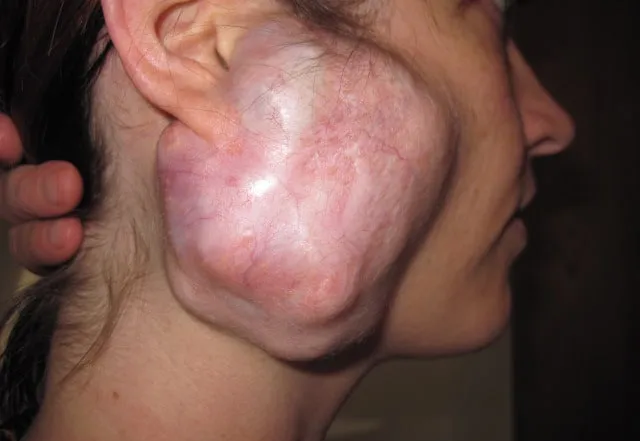
J.M. underwent definitive surgical removal of the parotid-region tumor at Osborne Head & Neck Institute.
The objectives of the operation were straightforward in principle but technically demanding in execution:
- Identify and remove the pathological tumor.
- Protect the facial nerve and its branches.
- Maintain tumor integrity during dissection whenever possible.
- Minimize injury to surrounding structures.
- Restore the contour of the side of the face as naturally as possible.
- Achieve a surgical result that would allow J.M. to move forward rather than continue living around the tumor.
Tumor integrity is particularly important when operating on certain benign parotid tumors. Pleomorphic adenoma, for example, is associated with recurrent disease when tumor cells are left behind or when the capsule is disrupted and tumor contents are spilled.⁵˒⁶
Because J.M.'s transcript does not document her final pathology, it would be inappropriate to assume that her tumor was a pleomorphic adenoma. However, the broader surgical principle remains important: controlled removal and careful handling of a parotid tumor can affect long-term outcomes.
The operation was successfully completed.
But as with every significant parotidectomy, one of the most important assessments occurred after the procedure was over.
Would the face move?
Nerve Function
Facial Nerve Preservation
Facial nerve function is one of the most important outcomes following parotidectomy.
Large series of parotid operations demonstrate that temporary postoperative facial weakness occurs more frequently than permanent dysfunction, particularly as the extent and complexity of surgery increase.²
This distinction is important.
A patient may recover completely from temporary weakness as inflammation and nerve manipulation resolve. Permanent facial paralysis, however, can affect eye closure, smiling, speech, oral competence, facial symmetry, and emotional expression.
For that reason, facial nerve preservation is built into every stage of parotid surgical planning.
When J.M. woke from anesthesia, she immediately recognized something important:
Everything moved.
Her face was functioning.
After years of uncertainty about surgery, that was the first indication that she had successfully crossed one of the milestones she had been worried about for so long.
Recovery
Immediate Postoperative Recovery
Later on the evening of surgery, J.M. recorded an update.
Despite having undergone a substantial operation, she reported that she was experiencing essentially no significant pain.
She noted some superficial numbness and altered sensation, comparing it to the temporary sensation produced by placing ice against the skin. She had taken prescription pain medication once as a precaution but did not describe significant postoperative pain.
A surgical drain remained in place, as is common following parotidectomy to prevent fluid accumulation within the operative space.
Even with the dressing covering the side of her face, she could already see the change.
The prominence created by the tumor was gone.
She repeatedly described being excited to have the dressing removed so that she could finally see what her face looked like without the mass.
Outcome
Seeing Herself Again
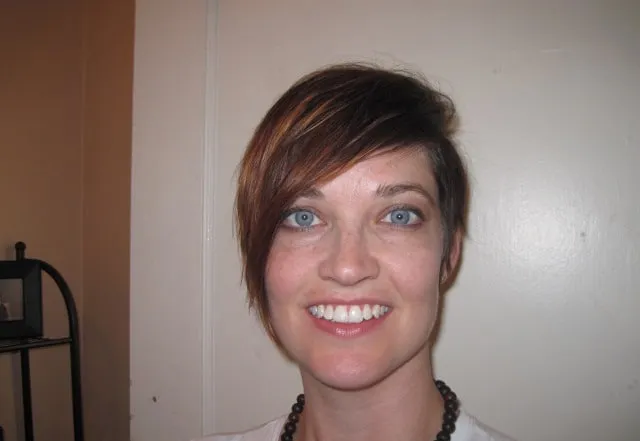
The day after surgery, J.M.'s dressing was changed.
For the first time, she saw her face.
Her response was immediate.
She began taking photographs and sending them to family and friends.
Two days after surgery, she described some expected swelling around the eye, but otherwise reported feeling remarkably well. She was no longer taking prescription pain medication and had used only acetaminophen earlier in the day.
Most importantly, she repeatedly returned to one observation:
"I look like me again."
That may be the most important sentence in her entire story.
J.M. had spent years looking into the mirror and seeing a tumor that increasingly defined the contour of one side of her face.
Then suddenly it was gone.
Within days of surgery, she was already planning a haircut so that she could wear her hair shorter and expose the side of her face she had previously tried to conceal.
Before surgery, she worried about the wind moving her hair.
After surgery, she wanted to cut it off.
That transformation tells us as much about the success of the operation as any surgical statistic.
Analysis
Discussion
J.M.'s case illustrates several important principles in the management of parotid tumors.
1. Parotid Tumors Require an Accurate Diagnosis and Deliberate Treatment Plan
Not every mass around the ear is a parotid tumor, and not every parotid tumor should be treated identically.
Evaluation typically requires clinical examination and appropriate imaging, with tissue diagnosis used when indicated. Treatment should be based on tumor characteristics, location, suspected pathology, facial nerve relationship, and the patient's previous surgical history.¹
J.M.'s experience demonstrates how damaging inconsistent medical communication can become. She received multiple opinions over several years before finding a treatment plan she understood and trusted.
2. Previous Surgery Can Make Parotidectomy More Complex
Revision parotid surgery deserves particular consideration.
Surgery alters tissue planes. Scar tissue may obscure normal anatomical landmarks, and recurrent disease can develop around or between facial nerve branches.
Studies examining recurrent pleomorphic adenoma specifically demonstrate that repeat operations carry increased technical challenges related to facial nerve identification and preservation.³˒⁴
Although J.M.'s exact pathology is not provided in the source material, her history of a prior operation was an important element of surgical planning.
3. The Facial Nerve Is Central to Parotid Surgery
The facial nerve passes directly through the parotid gland. Preserving it whenever oncologically and technically appropriate is therefore one of the defining objectives of parotidectomy.¹
The extent of surgery influences postoperative facial nerve outcomes. In a long-term series of conservative parotidectomy for benign pleomorphic adenoma, temporary weakness was substantially more frequent than permanent paralysis.² Contemporary approaches increasingly seek to match the extent of dissection to the tumor's anatomy while maintaining oncological safety.¹˒²
J.M.'s immediate postoperative facial movement was therefore a meaningful surgical outcome.
4. Tumor Handling Matters
For tumors such as pleomorphic adenoma, tumor rupture and spillage have been associated with recurrence.⁵
One clinical series examining 182 parotid pleomorphic adenomas found that tumor puncture and spillage were independently associated with recurrence.⁵ Long-term literature also demonstrates why adequate initial surgical management is important: recurrent pleomorphic adenoma can become multifocal and increasingly difficult to treat.⁴˒⁶
These findings reinforce a fundamental principle of parotid surgery: the first operation matters.
5. Recovery Is More Than Pain and Incision Healing
Surgeons frequently discuss postoperative recovery in terms of swelling, numbness, drains, pain control, facial movement, and wound healing.
Those measures are important.
But they do not fully describe recovery.
J.M. was thinking about earrings.
She was thinking about cutting her hair.
She was thinking about allowing the wind to blow across her face without worrying about exposing a tumor.
Those are not trivial outcomes.
They are the everyday expressions of returning to normal life.
Outcome
Conclusion
J.M.'s story began with a small lump behind her ear and developed into a journey lasting several years.
She underwent an earlier procedure. She sought multiple opinions. She encountered conflicting recommendations and at least one consultation that left her crying and less willing to proceed with surgery than when she arrived.
Eventually, she did what many patients with complicated parotid disease ultimately do.
She began looking for someone whose experience and treatment philosophy made sense to her.
When I spoke with J.M., she did not need another physician to tell her simply that the tumor should come out.
She needed a plan.
She needed her questions answered.
Most importantly, she needed confidence that the person operating on her understood what was at stake.
Her operation successfully removed the tumor while preserving facial movement. Her early postoperative course was remarkably comfortable, and within two days she was looking at photographs of her new facial contour and recognizing herself again.
Parotidectomy is often discussed as tumor surgery.
Technically, that is correct.
But the best outcomes involve much more.
The goal is to remove the disease without unnecessarily sacrificing the nerve that gives the face movement and expression. It is to preserve function, restore contour, and allow a patient to stop organizing life around a tumor.
For J.M., one comment summarized the entire journey better than I could:
"I look like me again."
That is what successful parotid surgery is ultimately supposed to accomplish.
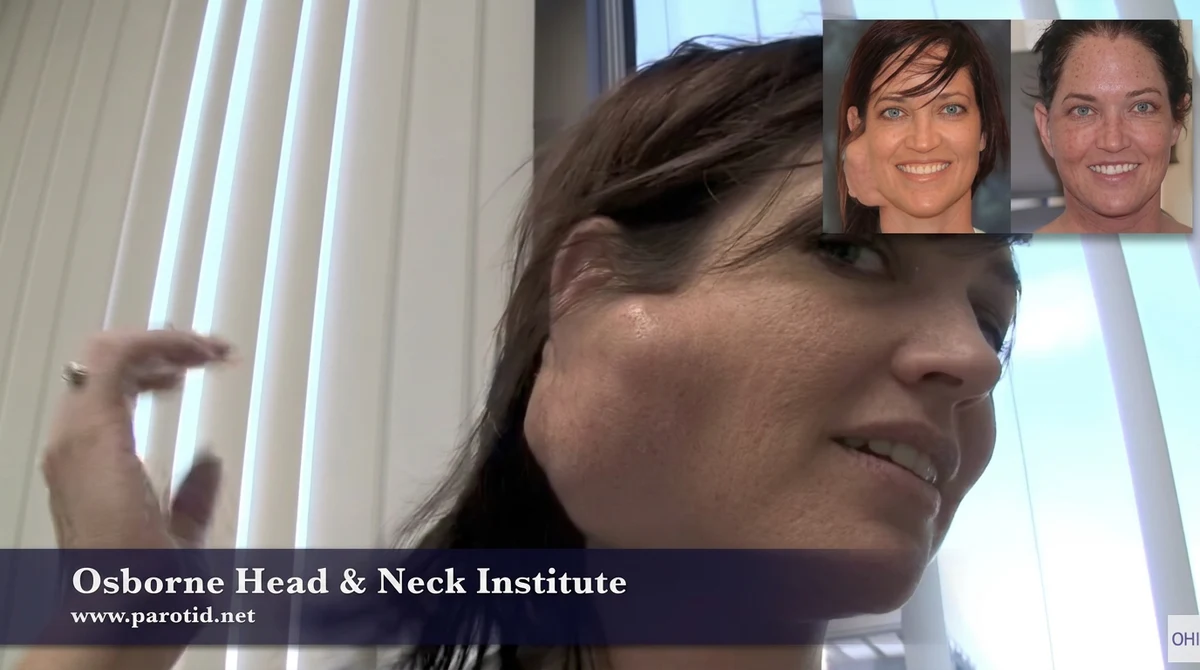
Watch the Full Story
Watch J.M.'s Journey
See J.M. describe her search for a parotid surgeon, the surgery that removed her tumor, and the moment she recognized herself again.
Literature
References
- Borumandi F, George KS, Cascarini L, Gossiel F, McGurk M. Parotid Surgery for Benign Tumours. Oral and Maxillofacial Surgery. 2012;16(3):285-290.
- Laccourreye H, Laccourreye O, Cauchois R, Jouffre V, Ménard M, Brasnu D. Total Conservative Parotidectomy for Primary Benign Pleomorphic Adenoma of the Parotid Gland: A 25-Year Experience With 229 Patients. Laryngoscope. 1994;104(12):1487-1494.
- Kinoshita I, Kanazawa T, Noda H, et al. Recurrent Benign Pleomorphic Adenoma of the Parotid Gland: Facial Nerve Identification and Risk Factors for Facial Nerve Paralysis at Re-operation. Auris Nasus Larynx. 2019;46(6):928-934.
- Abu-Ghanem S, Mizrachi A, Popovtzer A, et al. Recurrent Pleomorphic Adenoma of the Parotid Gland: Institutional Experience and Review of the Literature. Journal of Surgical Oncology. 2016;114(6):714-718.
- Riad MA, Abdel-Rahman H, Ezzat WF, Adly A, Dessouky O, Shehata M. Variables Related to Recurrence of Pleomorphic Adenomas: Outcome of Parotid Surgery in 182 Cases. Laryngoscope. 2011;121(7):1467-1472.
- Kanatas A, Ho MWS, Mücke T. Current Thinking About the Management of Recurrent Pleomorphic Adenoma of the Parotid: A Structured Review. British Journal of Oral and Maxillofacial Surgery. 2018;56(4):243-248.